Courage and Silence
Roger S. Keyes · 1982
A Study of the Life and Color Woodblock Prints of Tsukioka Yoshitoshi 1839–1892. Series 221.THE SERIES COLLECTION · KEYES 221
誠忠義心伝
Portraits of the forty-seven rōnin, with individual biographical descriptions.
THE SERIES COLLECTION
Hover to view details. Select a print to open its image and description.
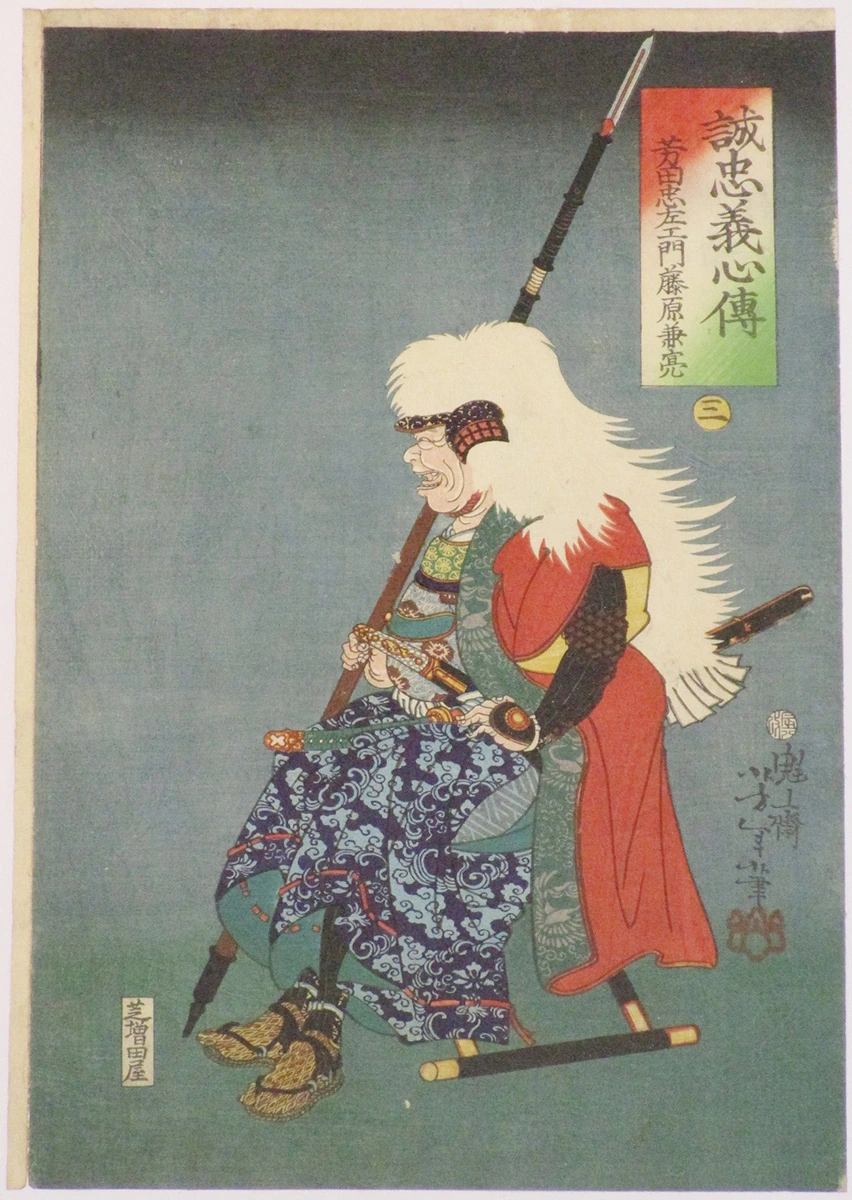
A friend of Oishi Kuranosuke; he was sixty-three when he died.VIEW PRINT ↗01#3 - Yoshida Chuzaemon (Kanesuke)06/1868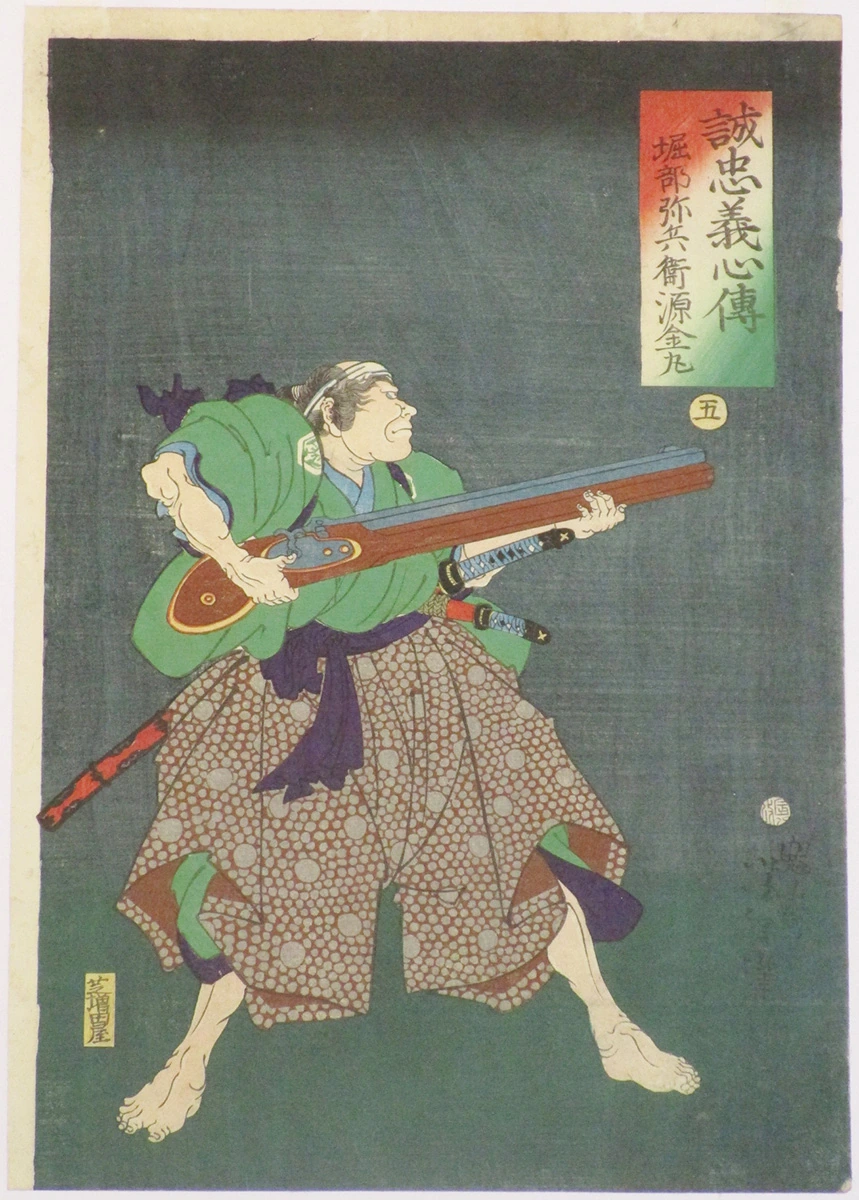 A man of high birth, who was seventy-eight years old when the ronin attacked Kira. He fought vigorously, astounding many.VIEW PRINT ↗02#5 - Horibe Yahei (Kanamaru)06/1868
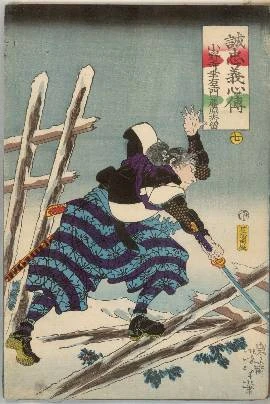 #7 Onodera Koemon Fujiwara no Hidetomi breaking through a snow covered fenceVIEW PRINT ↗03#7 Onodera Koemon Fujiwara no Hidetomi breaking through a snow covered fence06/1868
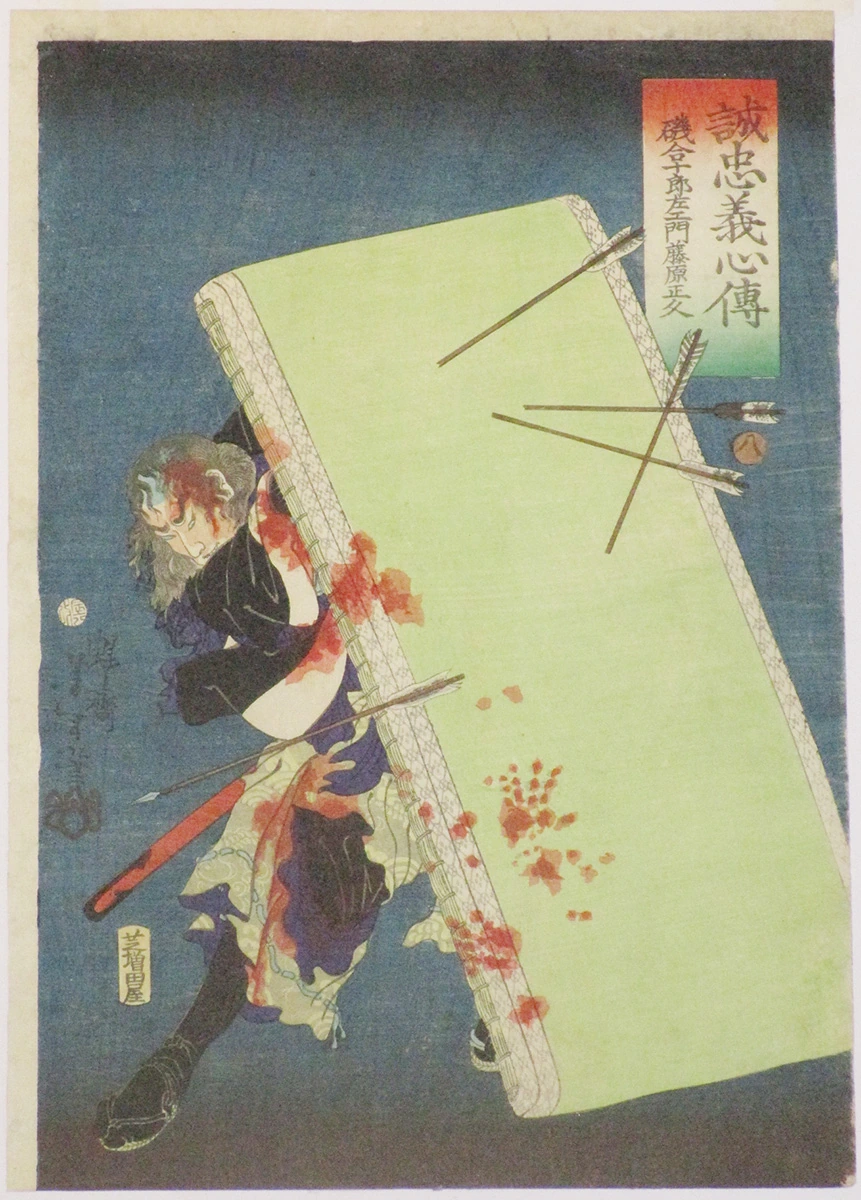 Isogai was first called into a temple at Kyoto, but joined the loyalists to avenge his master.VIEW PRINT ↗04#8 Isogai Jurosaemon Fujiwara no Masahisa (the print incorrectly gives his name as Isoai) protecting himself from arrows behind a tatami06/1868
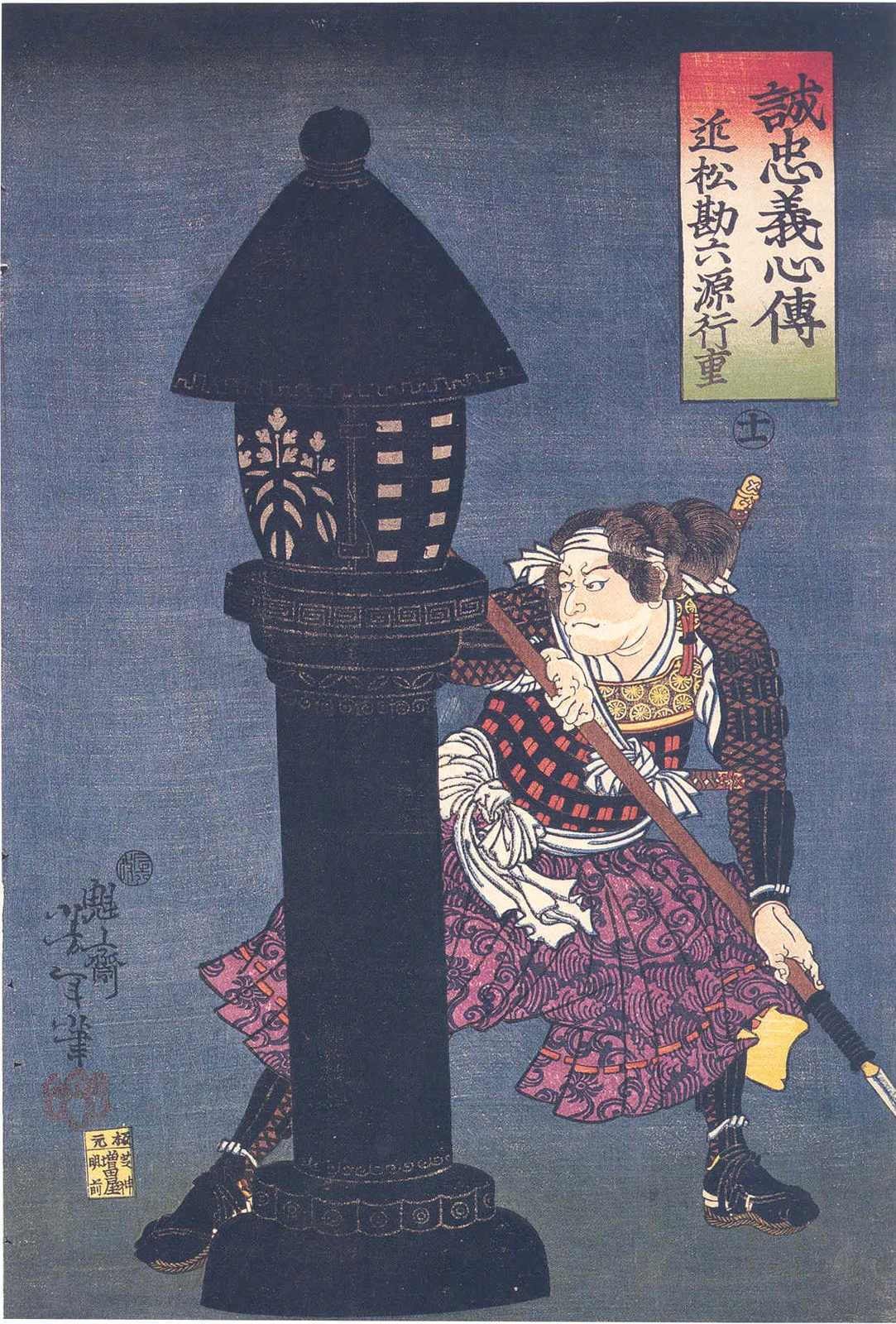 Known to be a good writer who used to receive a somewhat higher pay from his master Asano.VIEW PRINT ↗05#11 - Chikamatsu Kanroku Minamoto no Yukishige behind a stone lantern06/1868
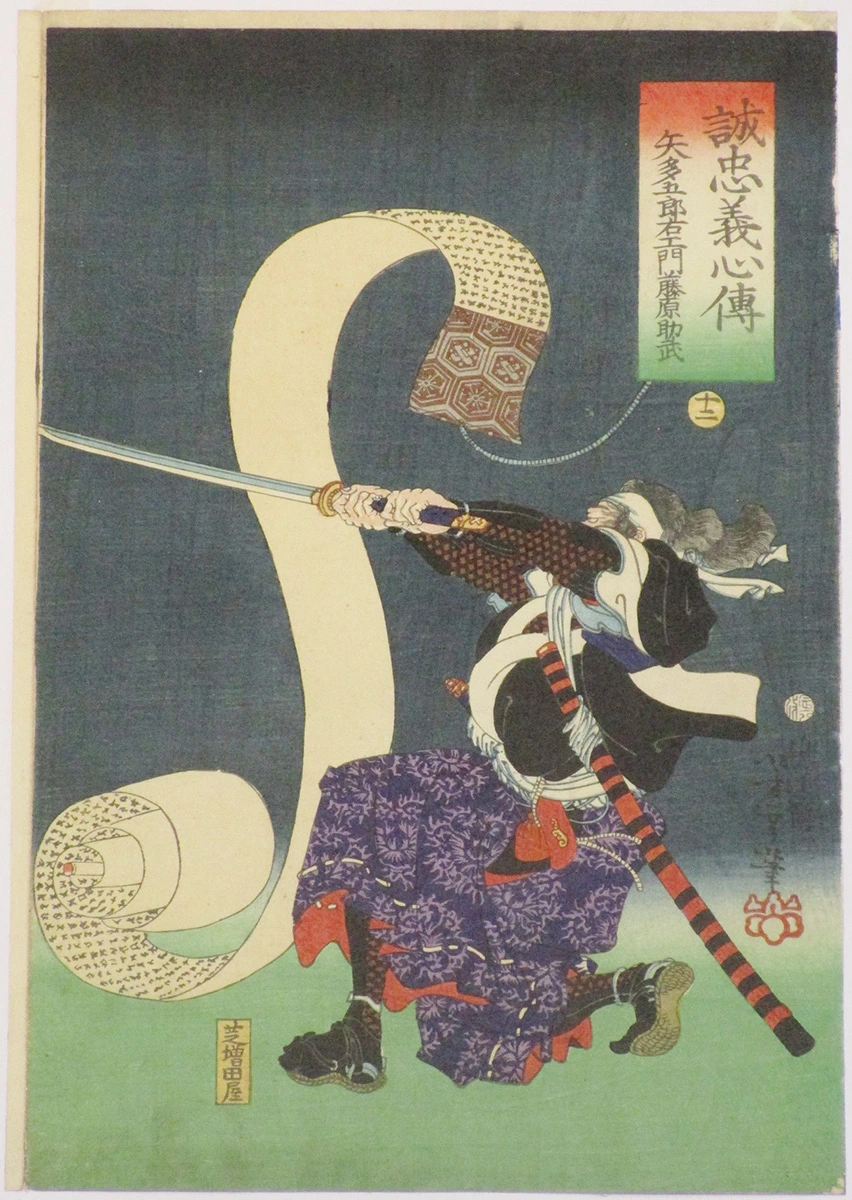 #12 – Yata Goroemon Fujiwara no SuketakeVIEW PRINT ↗06#12 – Yata Goroemon Fujiwara no Suketake06/1868
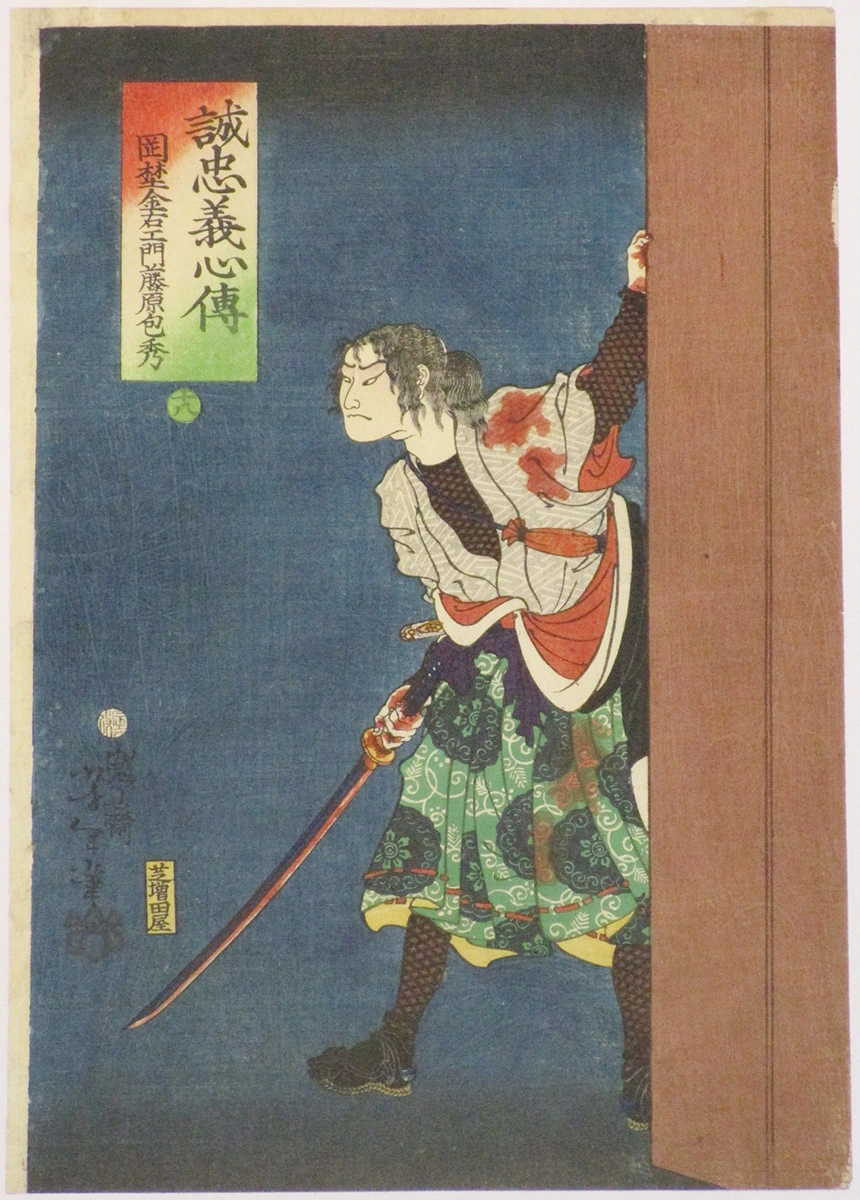 He was sent to a temple, but in order to satisfy his father’s wish he became one of the forty-seven ronin.VIEW PRINT ↗07#18 - Okano Kinuemon Fujiwara no Kinehide standing beside a wooden pillar, his unsheathed sword covered in blood06/1868
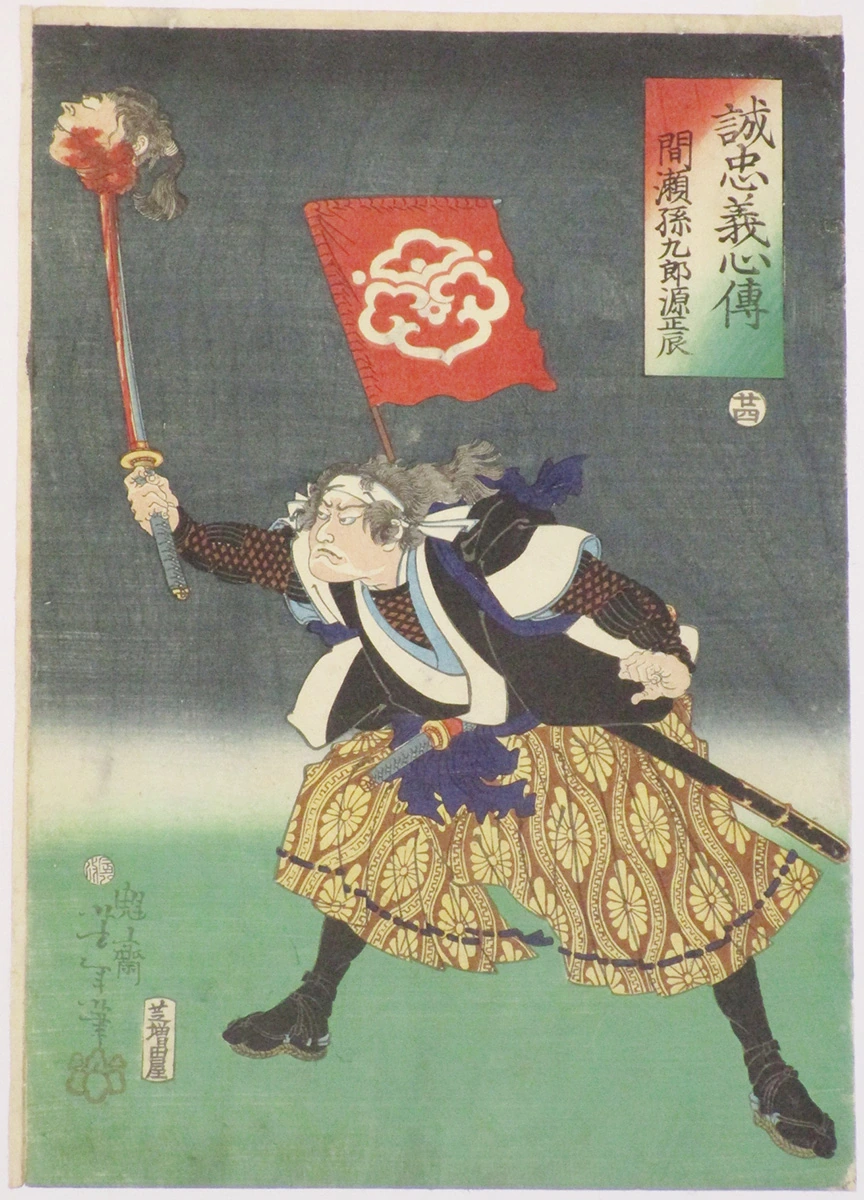 His real name was Kanzaki Yogoro. At the age of thirteen he killed a man to avenge a friend. After Asano’s death, he disguised himself as a merchant and got the patronage of his enemy Kira.VIEW PRINT ↗08#24 - Mase Magokuro Minamoto no Masatatsu with a severed head on the head of his sword06/1868
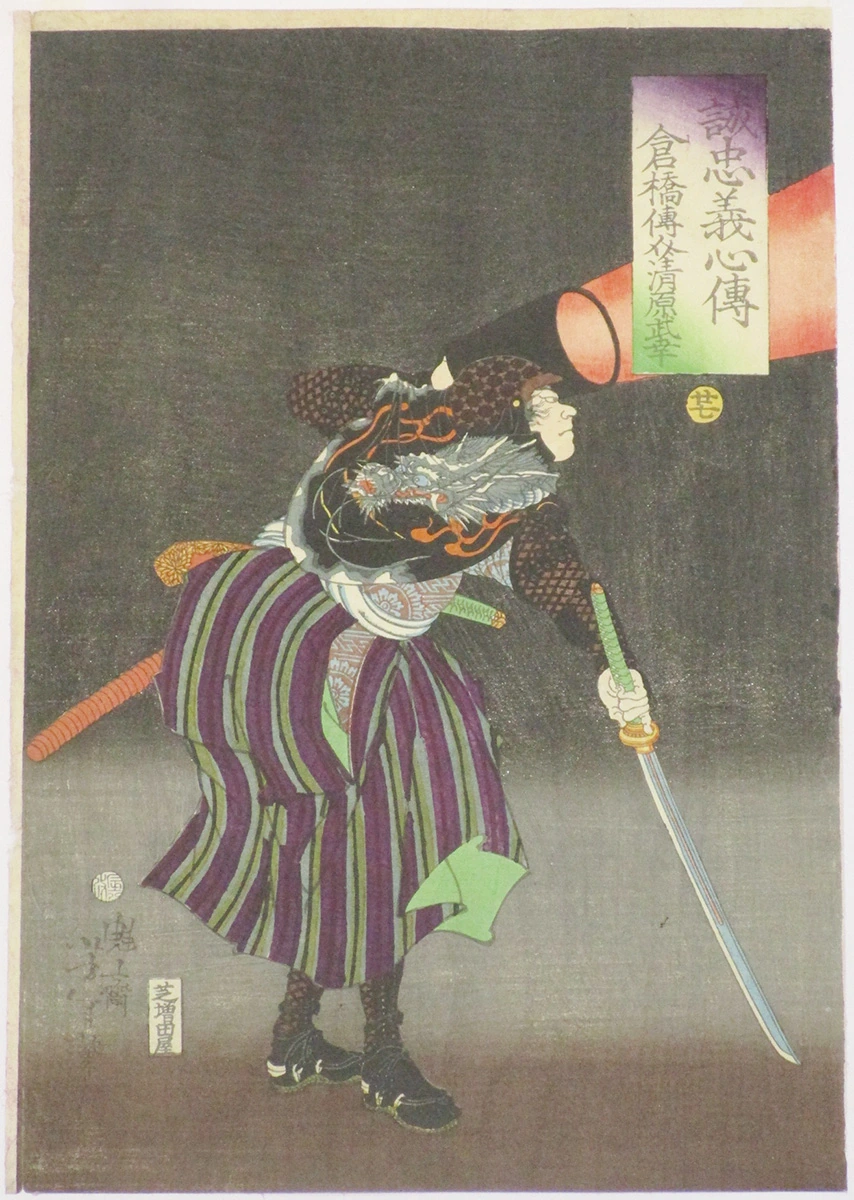 He disguised himself as a cloth dealer after his master’s death. He was 24 years old when he committed seppaku.VIEW PRINT ↗09#27 Kurahashi Densuke Kiyohara no Takeyuki flashing a lantern06/1868
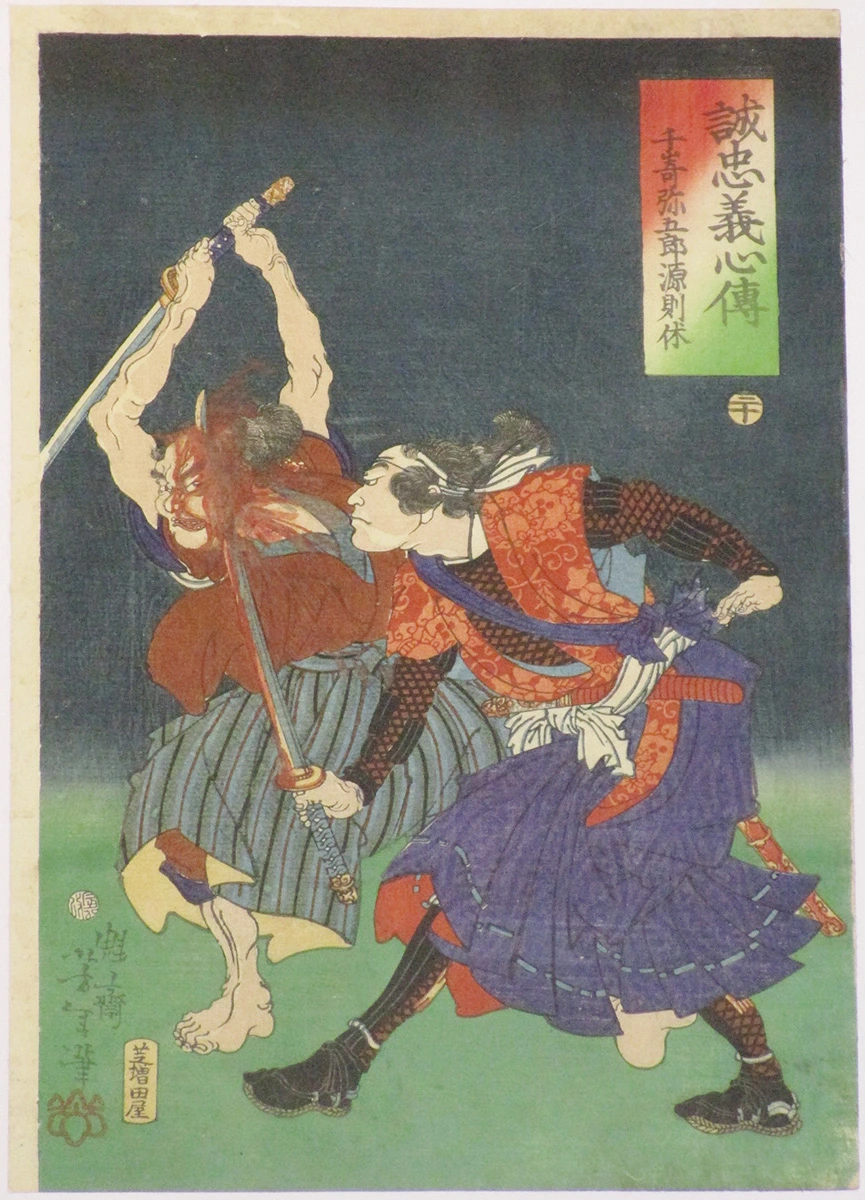 #30 - Senzaki Yagaro minamoto no Noriyasu slaying an opponentVIEW PRINT ↗10#30 - Senzaki Yagaro minamoto no Noriyasu slaying an opponent06/1868
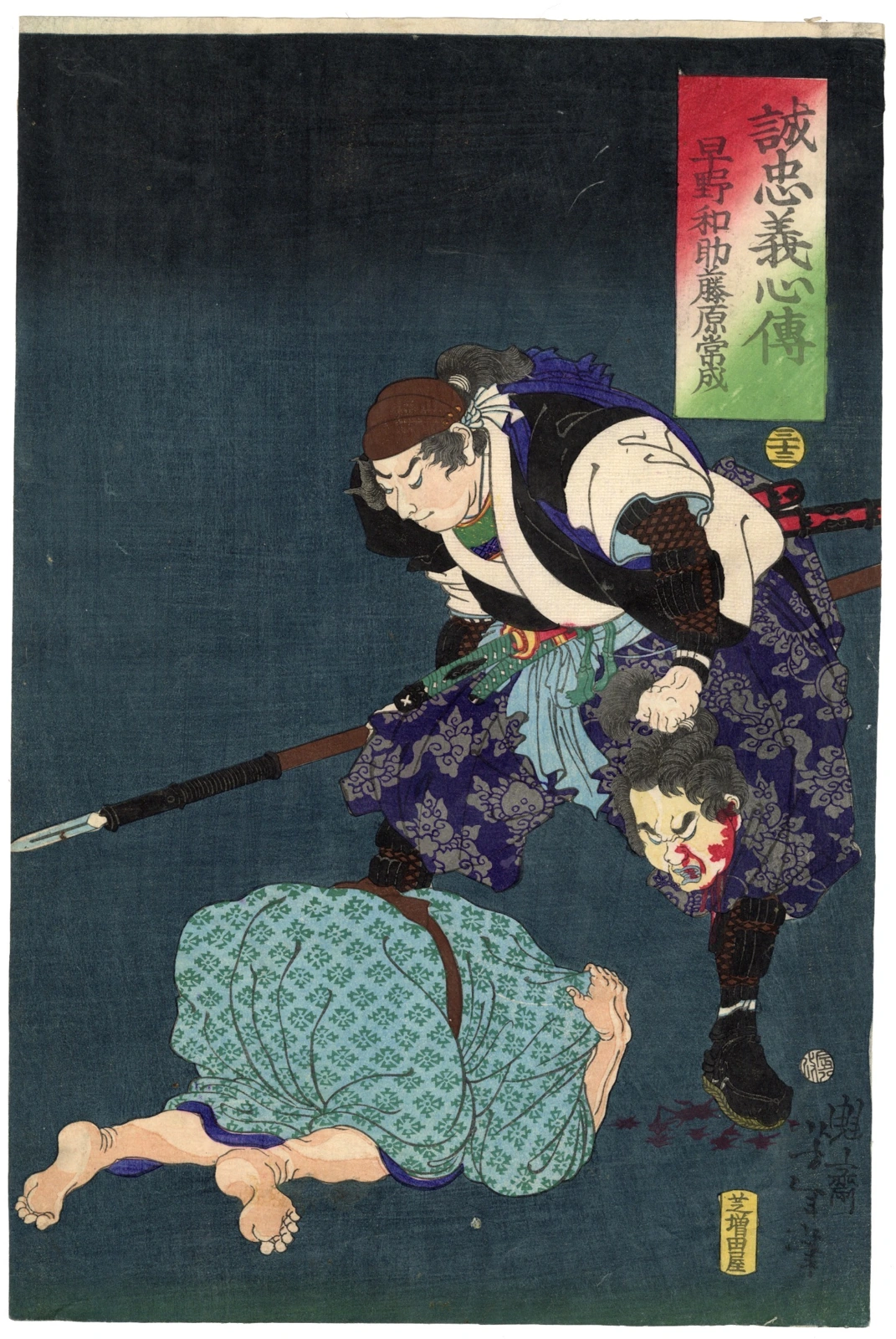 #33 Hayano Wasuke Fujiwara no Tsuneshige (Kayano Wasuke) holding a severed head, a servant lying in front of himVIEW PRINT ↗11#33 Hayano Wasuke Fujiwara no Tsuneshige (Kayano Wasuke) holding a severed head, a servant lying in front of him06/1868
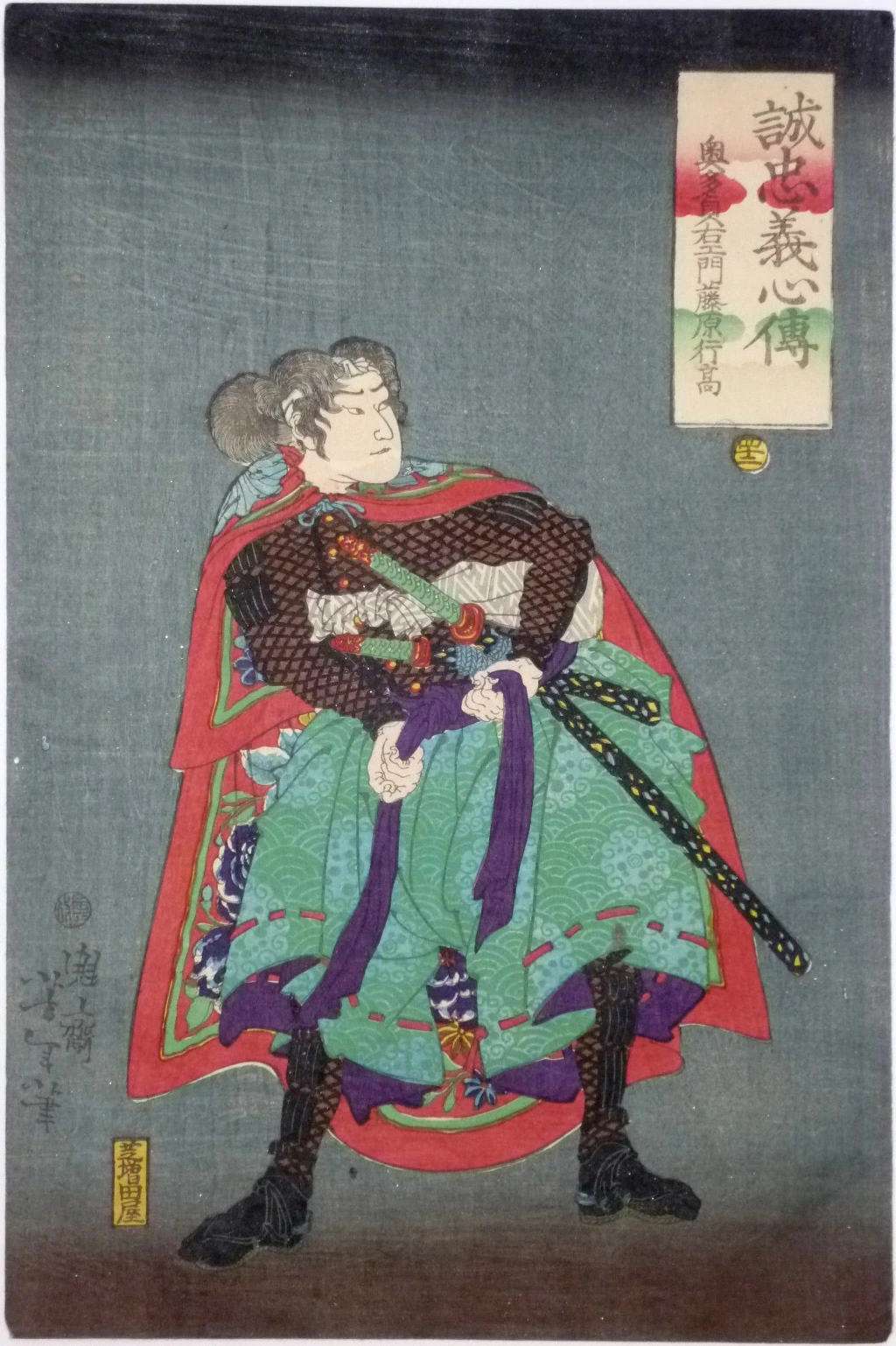 #42 – Okuda Sadaemon Fujiwara no YukitakaVIEW PRINT ↗12#42 – Okuda Sadaemon Fujiwara no Yukitaka06/1868
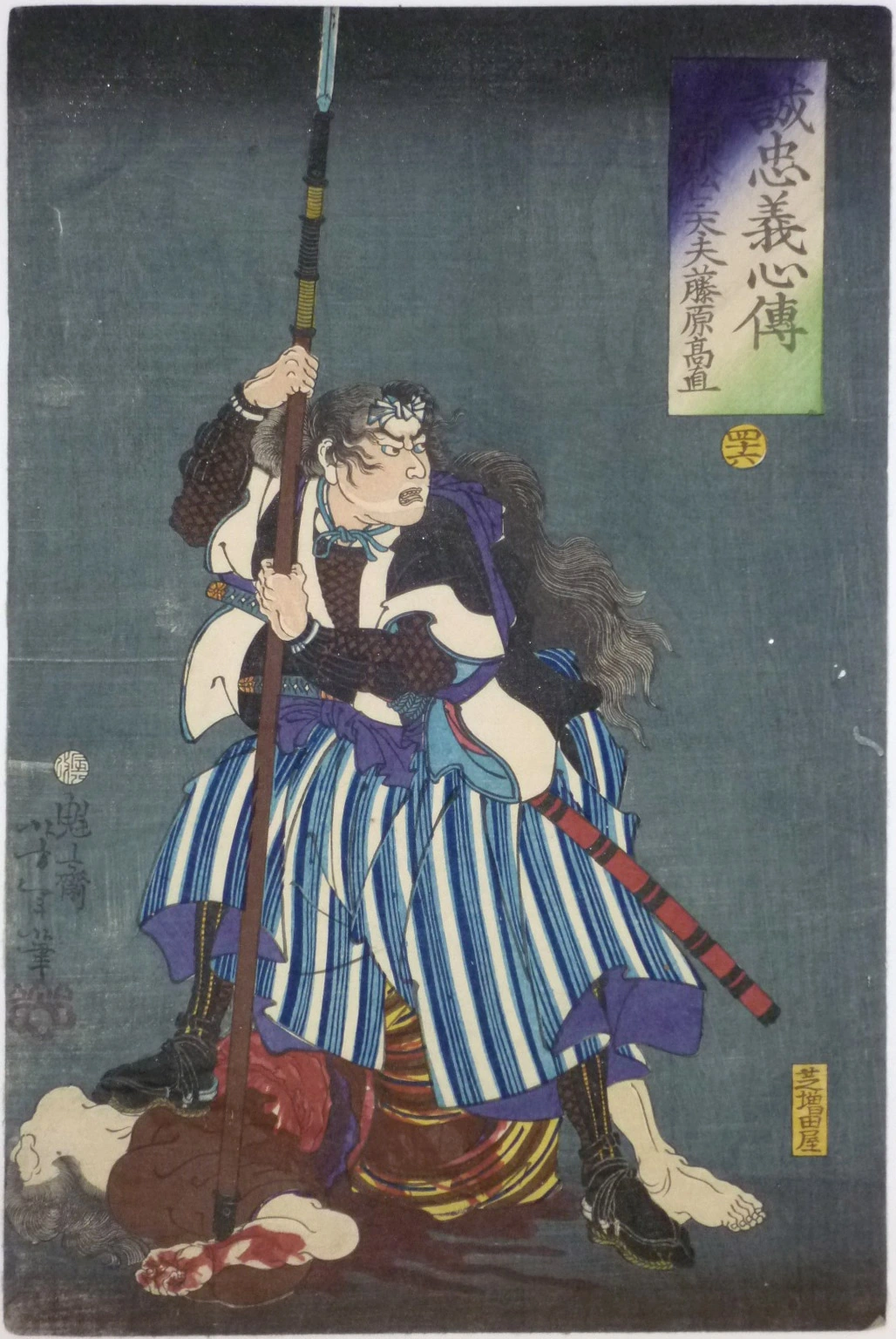 #46 - Uramatsu Sandayu (Takanao)VIEW PRINT ↗13#46 - Uramatsu Sandayu (Takanao)06/1868
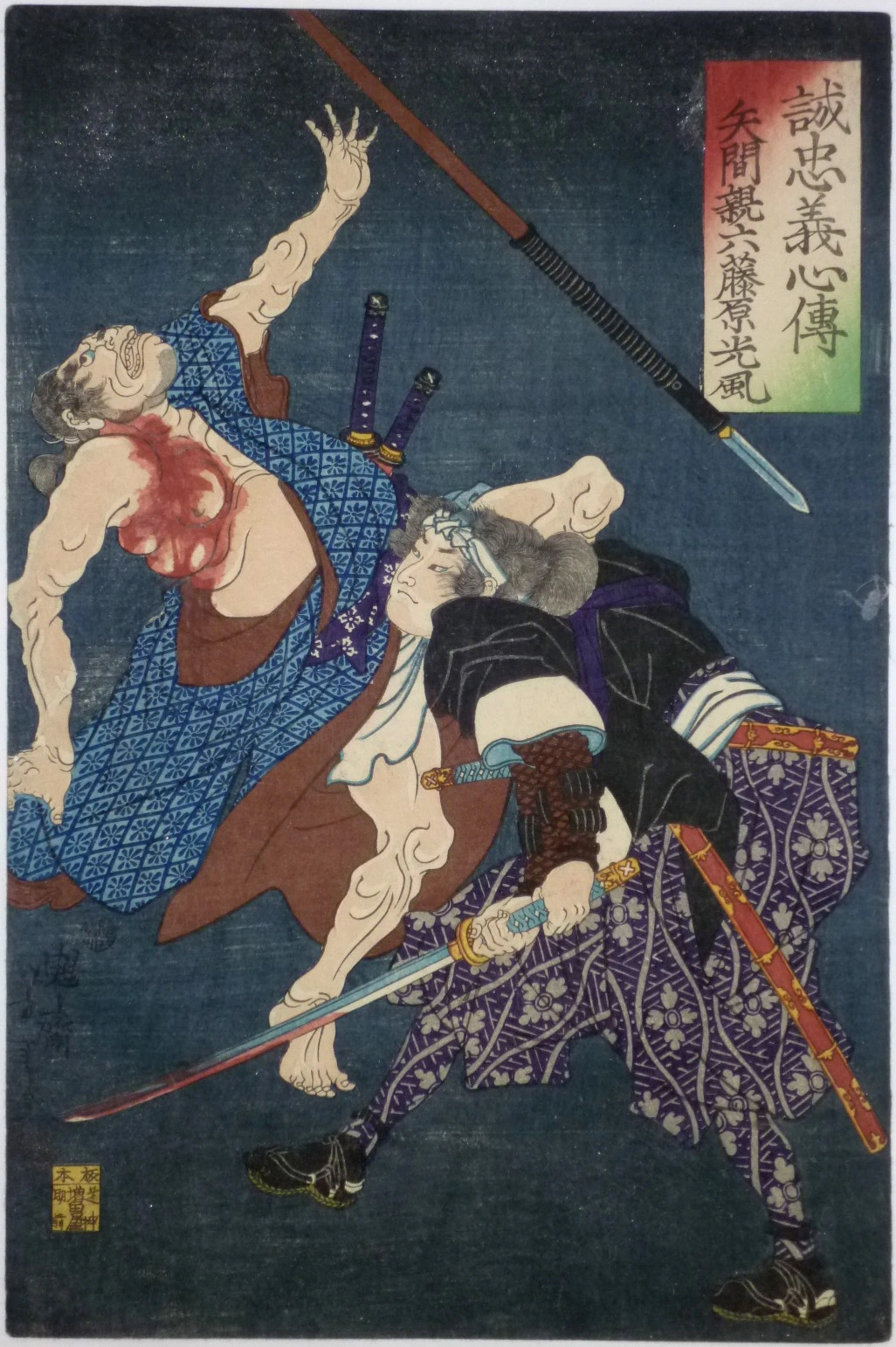 Married the daughter of Kira's carpenter, and sketched the plans of Kira’s new dwelling. He died at the age of twenty-one.VIEW PRINT ↗15#4 - Yazama Shinroku Fujiwara no Mitsukaze (Hazama Shinroku) kills one of Kira’s retainers.06/1868
Print number: Keyes catalogue numbering. Title number: the number on the print itself.
This page catalogs all known prints in the Yoshitoshi series 'Seichû gishinden (Portraits of True Loyalty and Chivalrous Spirit)'.
The story of the forty-seven rônin is one of the best known stories in Japanese literature. The rônin were former samurai of the Lord Asano Naganori. In the year 1701, Asano had been charged with the reception ceremony for the Imperial envoy, an important event. He was a soldier, and the Shogun assigned Lord Kira Yoshihisa (who had better knowledge of the ceremonial requirements) to assist Asano. Kira was apparently corrupt, and expected a bribe for his services from Asano. When Asano did not produce the bribe, Kira abandoned him without assistance. Asano completed the ceremony for the Imperial envoy, although it was not entirely in order. He later confronted Kira and in anger drew his sword. He wounded but did not kill Kira. The offense of drawing the sword was punishable by death and Asano was forced to commit seppuku.
Forty-seven of Asano's samurai, led by Captain Oishi Kuranosuke, developed a plan to avenge their late master. They blended into society and domestic lives, giving no hint that they harboured a secret plan. Oishi played a convincing drunk, and was derided by many, including former colleagues. Several other co-conspirators were able to infiltrate Kira's household. On December 14, 1702, the faithful samurai attacked Kira's compound in Edo. They were able to defeat the defenders, and found Kira cowering in a woodshed. Kira refused seppuku, and was killed. Thereafter, the samurai Terasaka Kichiemon was dispatched to carry news of the successful attack. The remaining 46 rônin presented themselves to the Shogun. The rônin had defied a shogunate order prohibiting revenge, but had also exemplified the precepts of bushido. The Shogun allowed the rônin to commit seppuku, rather than having them executed. The 46 rônin committed suicide on February 4, 1703. Terasaka Kichiemon, the 47th rônin, returned the following day but was pardoned. He was the only member to survive and died at the age of 78.
This story has spawned many accounts, or Chushingura, and many kabuki plays, the most popular being 'Kanadehon Chushingura.' Many ukiyo-e artists, including Kuniyoshi and Yoshitoshi, have created many works that deal with this popular subject. In this series, Seichû gishinden, Yoshitoshi depicts the rônin on darkly colored backgrounds. Most prints carry a number, for each rônin. Fourteen distinct designs are currently documented. Whether all 47 were produced has not been established.
Fourteen distinct designs are listed in the existing catalogue order. The print number identifies the entry in the Keyes catalogue numbering used on this site. The title number is the number printed on the sheet itself. These two numbers may differ.
The former entry #14 duplicated Yata Goroemon, already represented by entry #6 (printed number 12), and has been removed. Existing catalogue identifiers are retained.
SCHOLARSHIP & ACKNOWLEDGEMENTS
Roger S. Keyes · 1982
A Study of the Life and Color Woodblock Prints of Tsukioka Yoshitoshi 1839–1892. Series 221.Eric van den Ing & Robert Schaap · 1992
Japanese Prints by Yoshitoshi 1839–1892. Series 21, pages 45 and 107.