Courage and Silence
Roger S. Keyes · 1982
A Study of the Life and Color Woodblock Prints of Tsukioka Yoshitoshi 1839–1892. Series 255.THE SERIES COLLECTION · KEYES 255
誠忠 義士 銘々 畫 傳
Seichū gishi meimei gaden
Portraits of the forty-seven rōnin and other figures associated with their story.
THE COMPLETE SERIES
Hover to view details. Select a print to open its image and description.
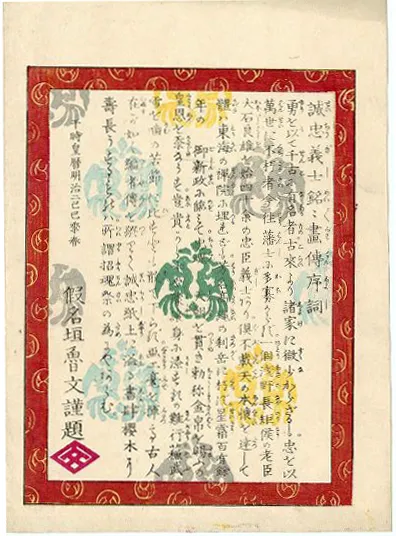 Preface dated spring 1869VIEW PRINT ↗01Preface dated spring 18692/1869
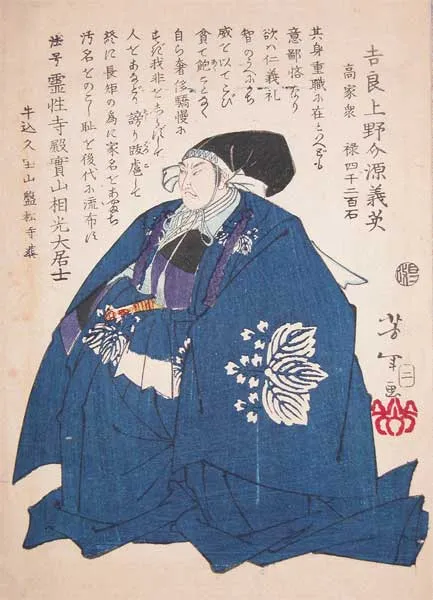 Kira Kozuke-no-suke, also known as Moronao, insulted Asano and forced him to draw his sword in the court.VIEW PRINT ↗02Kira Kazusanosuke Minamoto no Yoshihide (Kira Kōzuke no Suke)2/1869
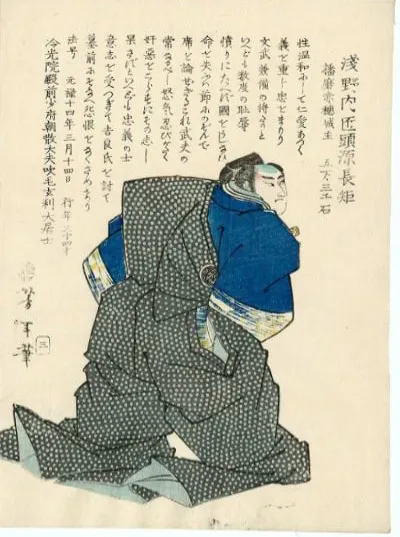 Asano Takumi no kami Minamoto no NaganoriVIEW PRINT ↗03Asano Takumi no kami Minamoto no Naganori2/1869
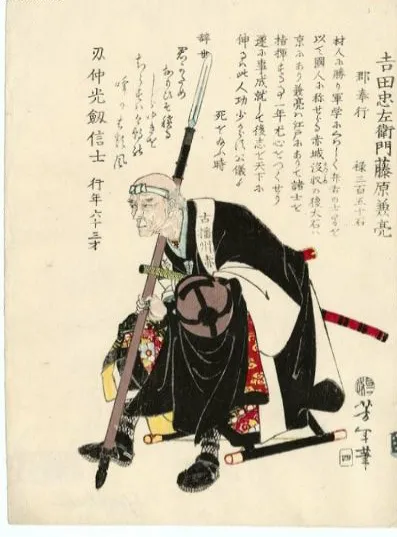 Yoshida Chūzaemon Fujiwara no KanesukeVIEW PRINT ↗04Yoshida Chūzaemon Fujiwara no Kanesuke2/1869
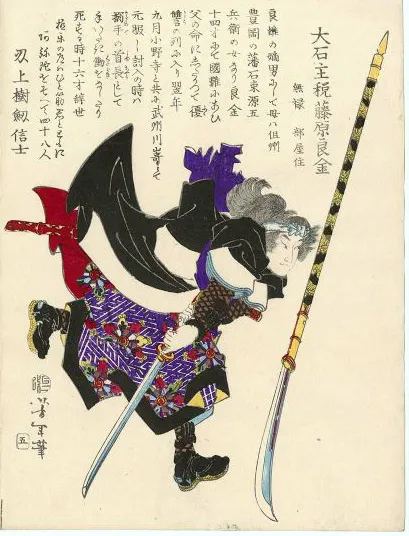 Ōishi Chikara Fujiwara no YoshikaneVIEW PRINT ↗05Ōishi Chikara Fujiwara no Yoshikane2/1869
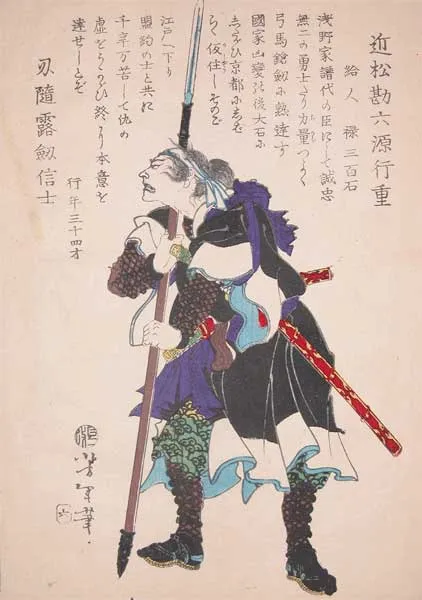 Chikamatsu Kanroku Yukishige's family were retainers of the Asano family for generations. His mother encouraged him to take part in the raid. Later that night, she killed herself.VIEW PRINT ↗06Chikamatsu Kanroku Minamoto no Yukishige2/1869
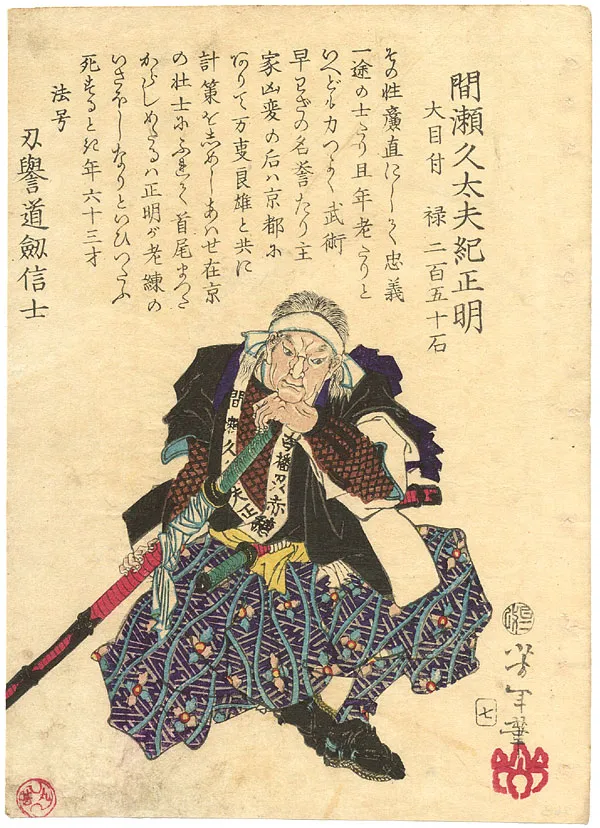 Mase Kyūdayū Ki no Masaakira (Manase Kyūdayū)VIEW PRINT ↗07Mase Kyūdayū Ki no Masaakira (Manase Kyūdayū)2/1869
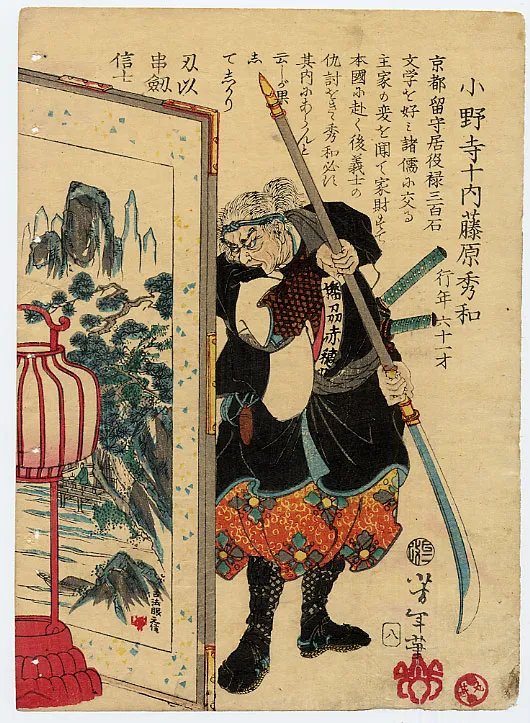 Onodera Jūnai Fujiwara no HidekazuVIEW PRINT ↗08Onodera Jūnai Fujiwara no Hidekazu2/1869
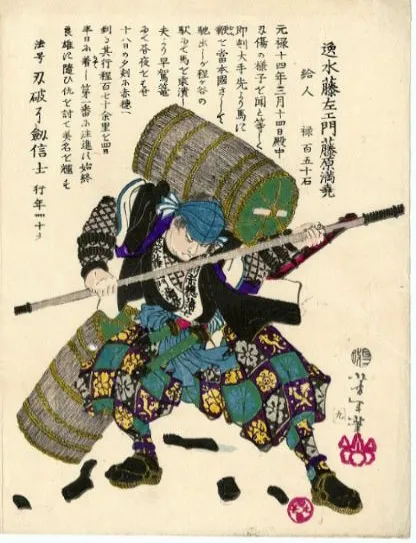 Hayamizu Tōzaemon Fujiwara no MitsutakaVIEW PRINT ↗09Hayamizu Tōzaemon Fujiwara no Mitsutaka2/1869
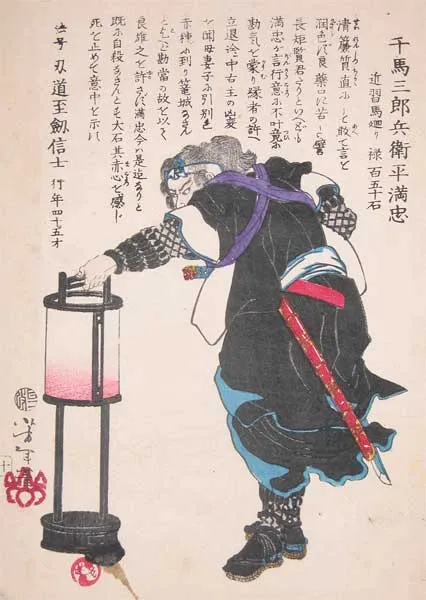 Saburobei Mitsutada was a loyal samuari. He was a teacher of Heki-ryu, a form of archery. On the night of the raid he fought valently, killing three men.VIEW PRINT ↗10Chiba Saburōbyōe Taira no Mitsutada (Samba Saburobei)2/1869
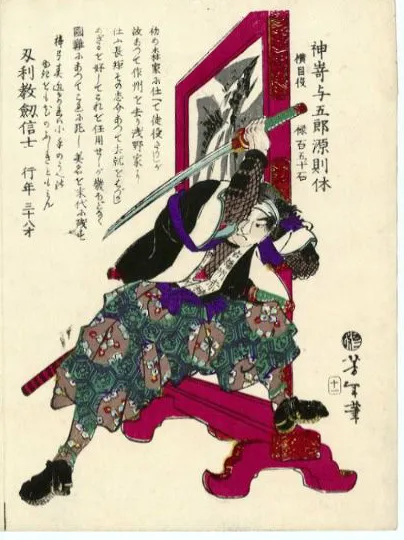 Kanzaki Yogorō Minamoto no NoriyasuVIEW PRINT ↗11Kanzaki Yogorō Minamoto no Noriyasu2/1869
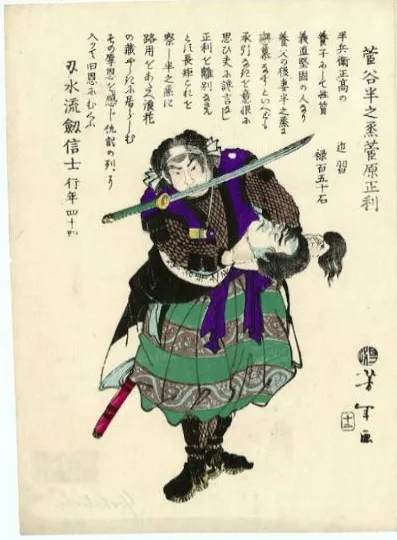 Kan'ya Hannojō Sugawara no Masatoshi (Sugaya Hannojō)VIEW PRINT ↗12Kan'ya Hannojō Sugawara no Masatoshi (Sugaya Hannojō)2/1869
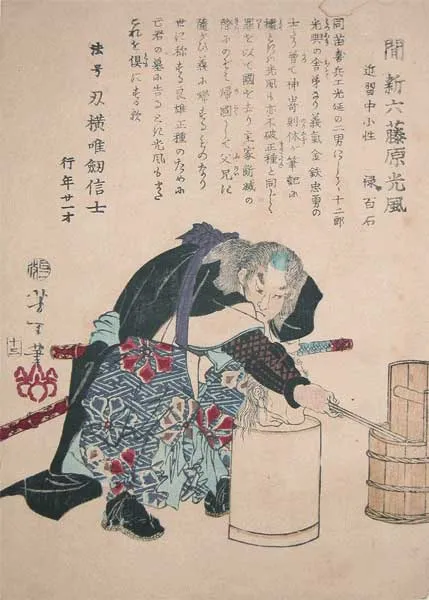 Hazama Shinroku Mitsukaze went to Kanto with the other loyalists and lived in Kojimachi after his lord's death. He assisted in spying on Moronao's house and fought well on the night of the attack.VIEW PRINT ↗13Hazama Shinroku Fujiwara no Mitsukaze2/1869
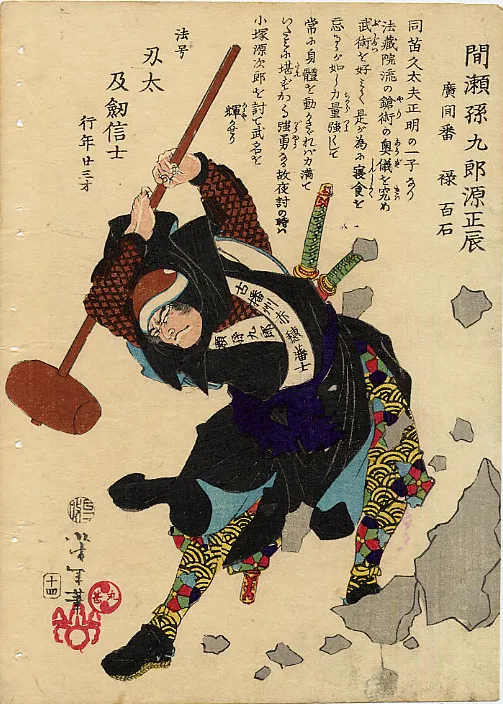 Mase Magokurō Minamoto no Masatoki (Manase Magokurō)VIEW PRINT ↗14Mase Magokurō Minamoto no Masatoki (Manase Magokurō)2/1869
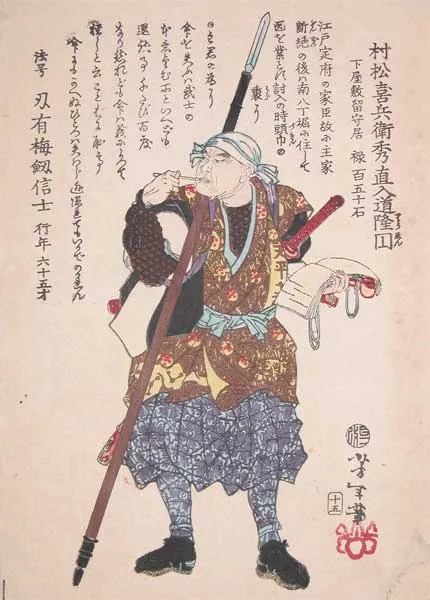 Muramatsu Kihei was a physician after Asano's death.. He was 60 years old at the time of the attack and displayed great valor.VIEW PRINT ↗15Muramatsu Kihei Hidenao Nyūdō Ryūen2/1869
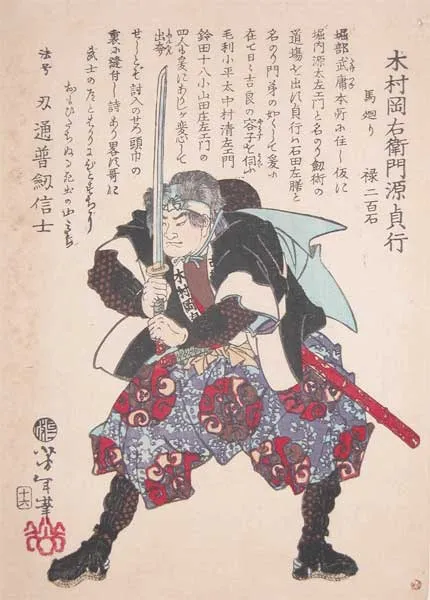 Kimura Okaemon Sadayuki was an expert horseman and swordsman in the service of Lord Asano.VIEW PRINT ↗16Kimura Okaemon Minamoto no Sadayuki2/1869
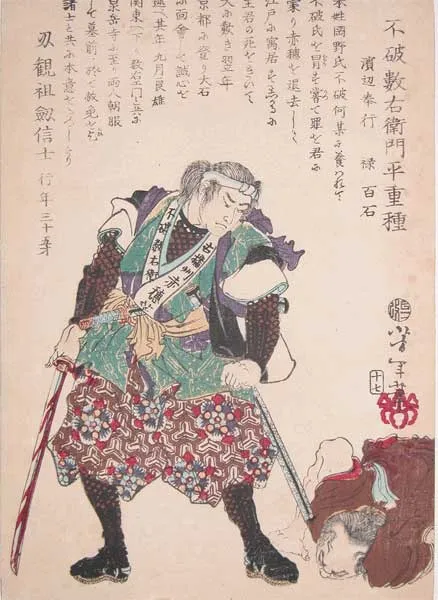 Fuwa Katzuemon Masatane was hot tempered, and an expert in suemonogiri swordsmanship. He was 35 years old at his death.VIEW PRINT ↗17Fuwa Kazuemon Taira no Shigetane2/1869
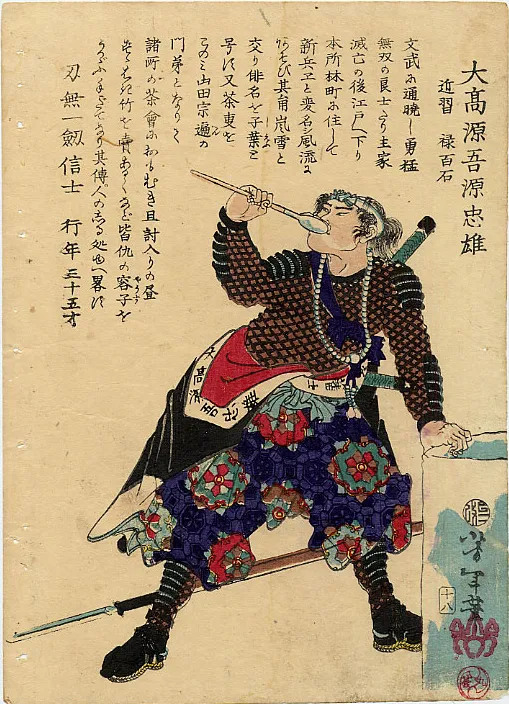 Ōtaka Gengo Minamoto no TadaoVIEW PRINT ↗18Ōtaka Gengo Minamoto no Tadao2/1869
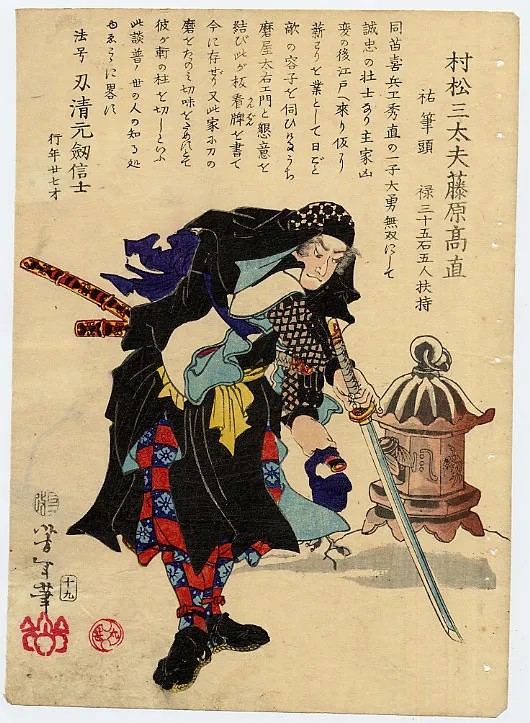 Muramatsu Sandayū Fujiwara no TakanaoVIEW PRINT ↗19Muramatsu Sandayū Fujiwara no Takanao2/1869
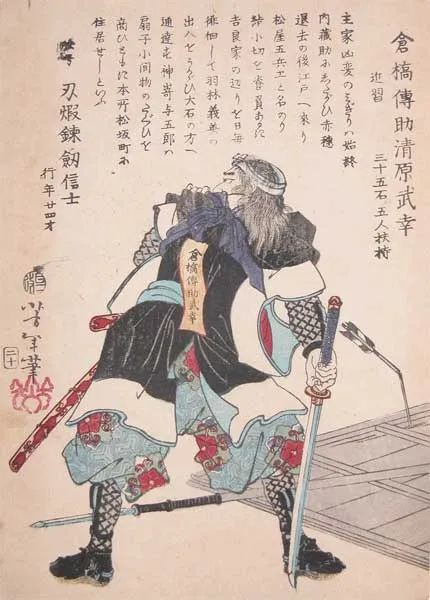 Kurahashi Densuke Takeyuki was 24 years old on the night of the attack. He was very hot tempered and an expert in martial arts. He procured a map of the enemy's house and located the secret room where Kira hid.VIEW PRINT ↗20Kurahashi Densuke Kiyowara Takeyuki2/1869
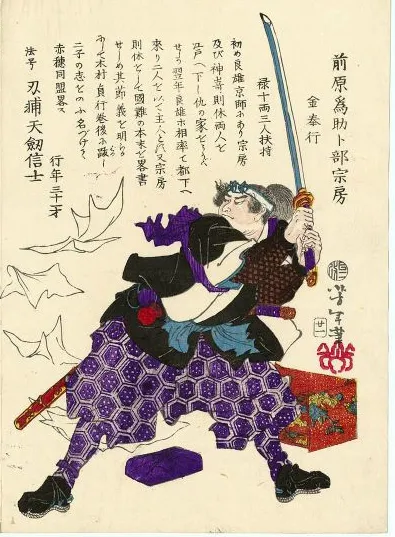 Maebara Isuke Urabe no MunefusaVIEW PRINT ↗21Maebara Isuke Urabe no Munefusa2/1869
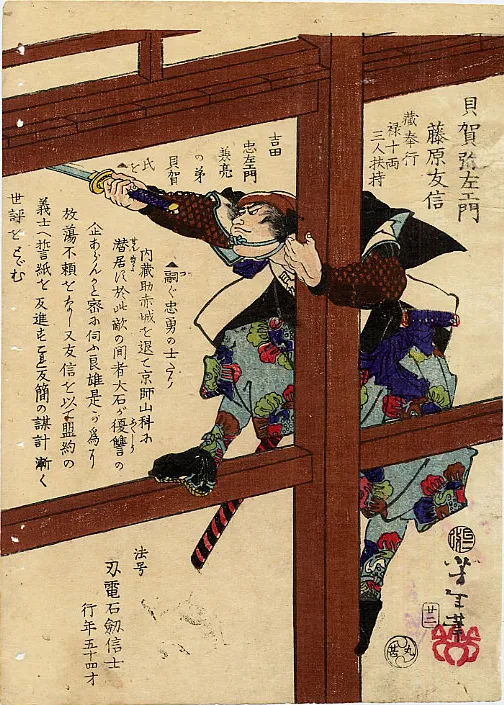 Kaiga Yazaemon Fujiwara no TomonobuVIEW PRINT ↗22Kaiga Yazaemon Fujiwara no Tomonobu2/1869
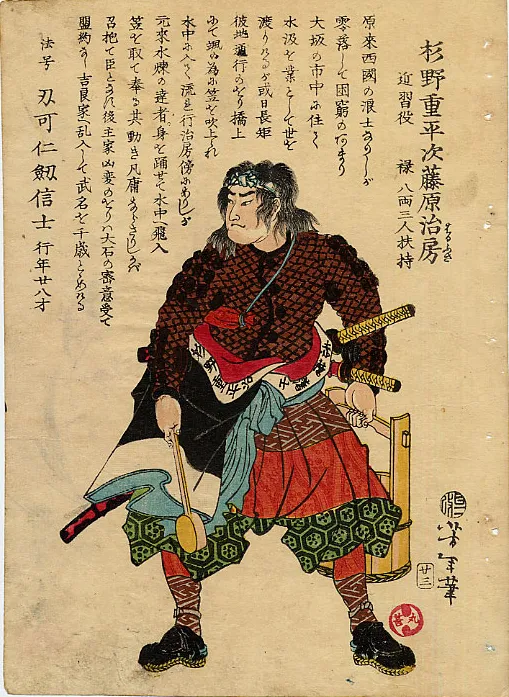 Sugino Juheiji Fujiwara no HarufusaVIEW PRINT ↗23Sugino Juheiji Fujiwara no Harufusa2/1869
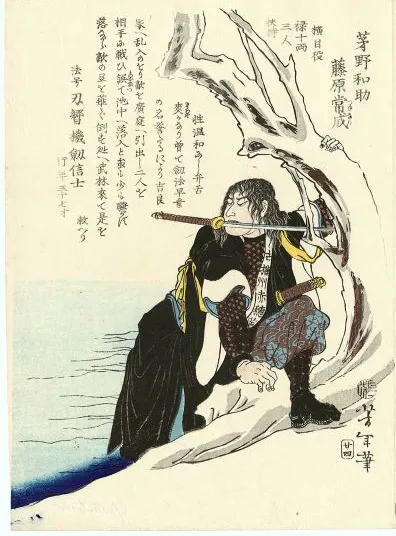 Kayano Wasuke Fujiwara no TsunenariVIEW PRINT ↗24Kayano Wasuke Fujiwara no Tsunenari2/1869
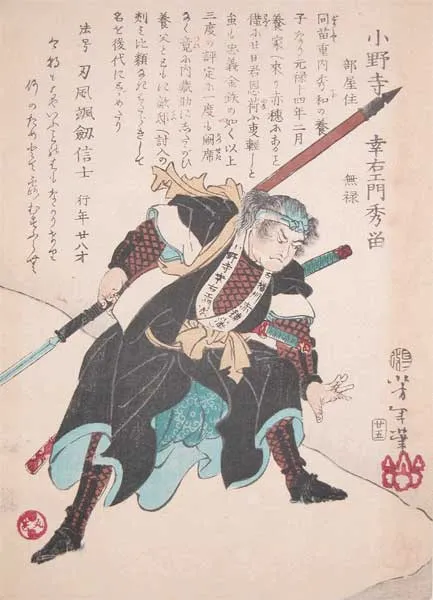 Onodera Kōemon HidetomeVIEW PRINT ↗25Onodera Kōemon Hidetome2/1869
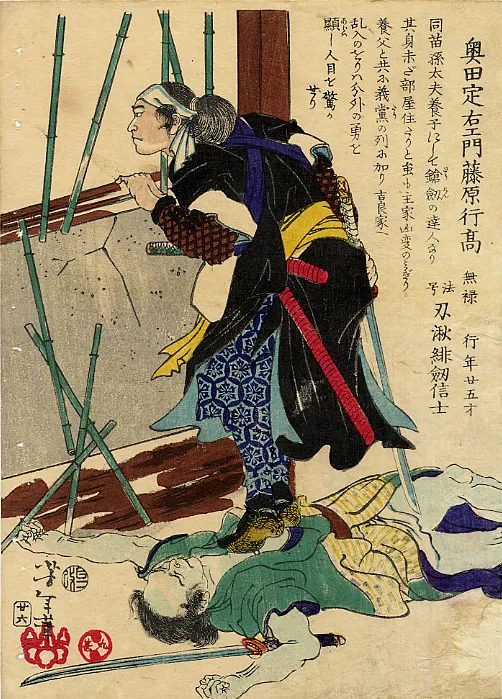 Okada Sadaemon Fujiwara no Yukitaka (Okuda Sadaemon)VIEW PRINT ↗26Okada Sadaemon Fujiwara no Yukitaka (Okuda Sadaemon)2/1869
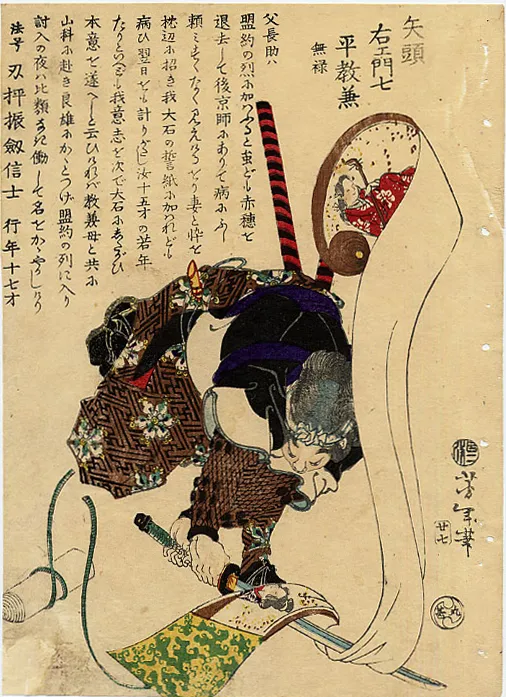 Yatō Emoshichi Taira no Norikane (Yazu Uemonshichi)VIEW PRINT ↗27Yatō Emoshichi Taira no Norikane (Yazu Uemonshichi)2/1869
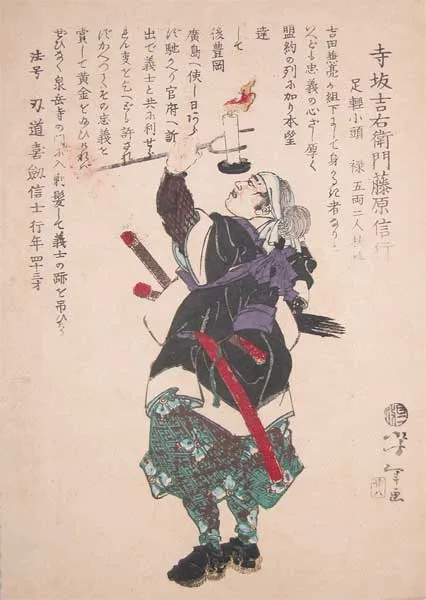 Terasaka Kichiemon Nobuyuki was the only Ronin who did not commit seppuku because he was on an important errand. He was pardoned by the Shogun, Thereafter, and became a priest and took after the tombs of the other Ronin. He lived to be 80 years old.VIEW PRINT ↗28Terasaka Kiemon Fujiwara no Nobuyuki (Terasaka Kichiemon)2/1869
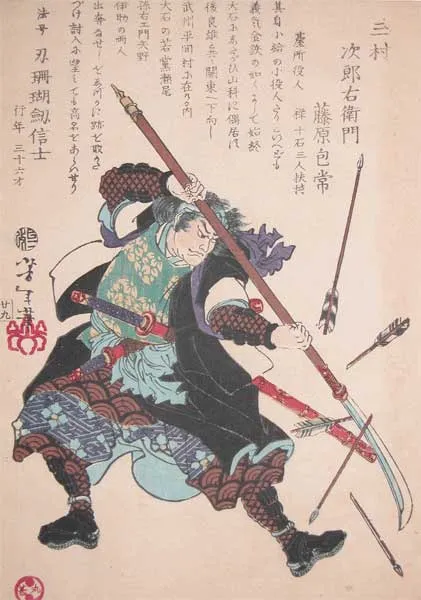 Mitsumura Jiroemon Kanetsune was a chef, and performed the task with care and diligence. He won numerous awards for his culinary skill.VIEW PRINT ↗29Mimura Jirōemon Fujiwara no Kanetsune (Mitsumura Jirōemon)2/1869
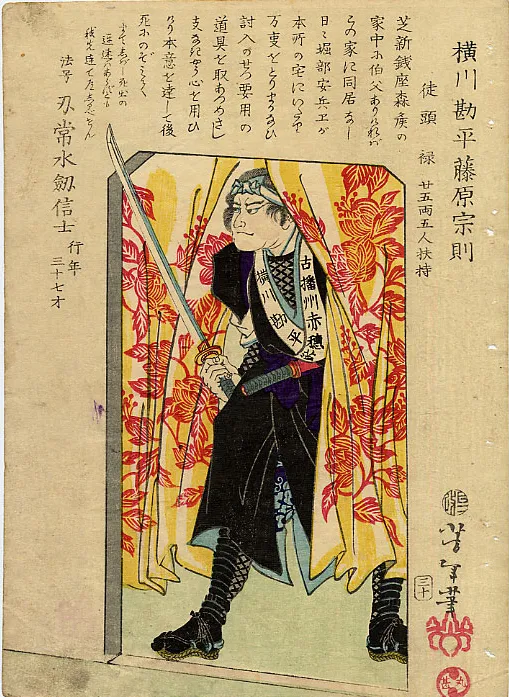 Yokokawa Kanpei Fujiwara no Munenori (Yokogawa Kampei)VIEW PRINT ↗30Yokokawa Kanpei Fujiwara no Munenori (Yokogawa Kampei)2/1869
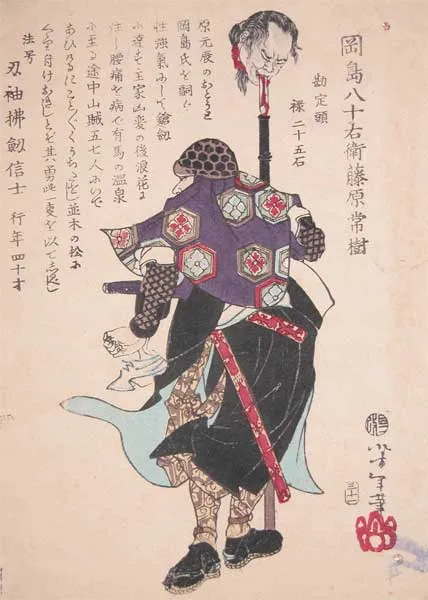 Okajima Yasoemon Tsunetatsu once overcame 5 bandits with his swordsmanship, and tied them to the trees.VIEW PRINT ↗31Okajima Yasoemon Fujiwara no Tsuneki2/1869
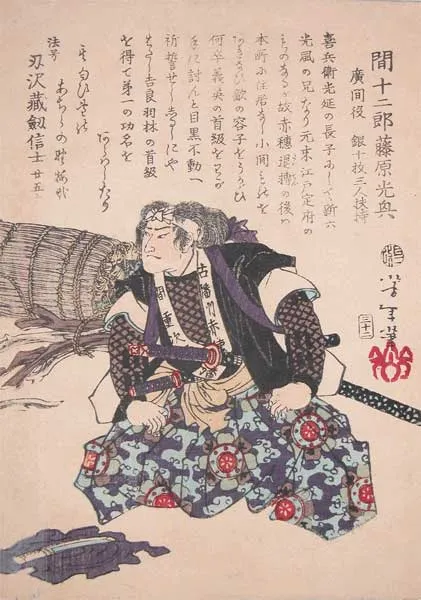 Hazama Jujiro Motooki killed Kira with his spear. His wife killed herself at his tomb, leaving a note which read "You were a loyal servant to the lord and never wanted to serve another. Even if you lost your life, your name will live long as a great soldier."VIEW PRINT ↗32Hazama Jūjirō Fujiwara no Mitsuoki2/1869
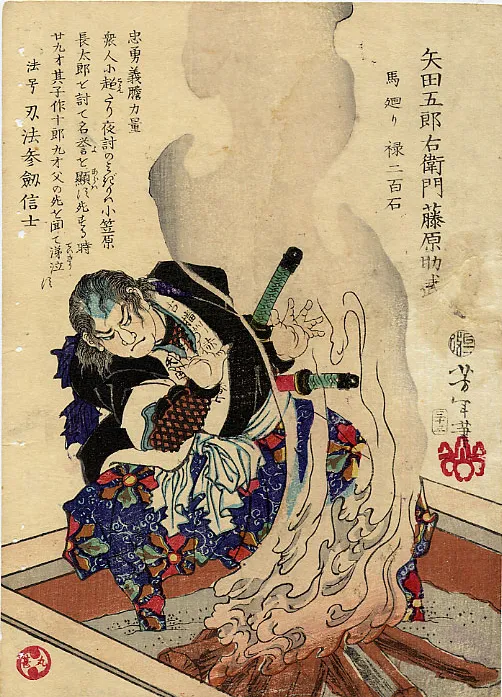 Yata Gorōemon Fujiwara no SuketakeVIEW PRINT ↗33Yata Gorōemon Fujiwara no Suketake2/1869
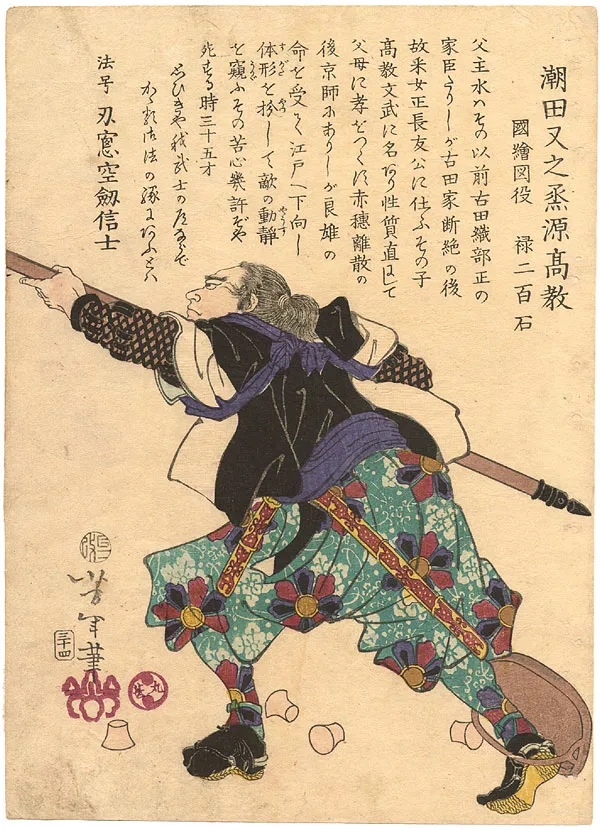 Seta Matanojō Minamoto no Takanori (Shiota Matanojō)VIEW PRINT ↗34Seta Matanojō Minamoto no Takanori (Shiota Matanojō)2/1869
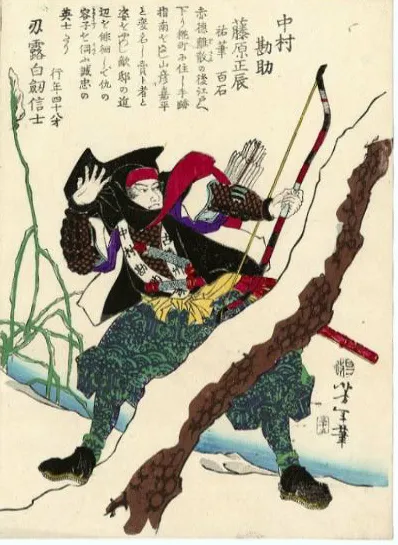 Nakamura Kansuke Fujiwara no MasatokiVIEW PRINT ↗35Nakamura Kansuke Fujiwara no Masatoki2/1869
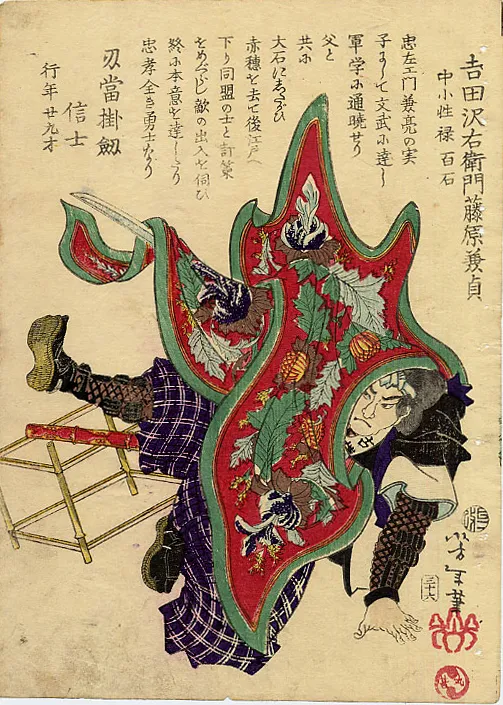 Yoshida Sawaemon Fujiwara no KanesadaVIEW PRINT ↗36Yoshida Sawaemon Fujiwara no Kanesada2/1869
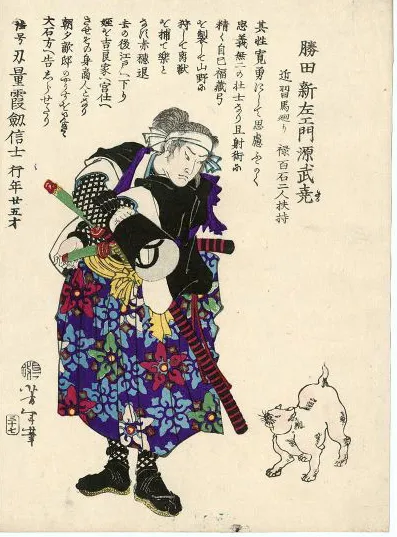 Katsuta Shin'emon Minamoto no Taketaka (Katsuta Shinzaemon)VIEW PRINT ↗37Katsuta Shin'emon Minamoto no Taketaka (Katsuta Shinzaemon)2/1869
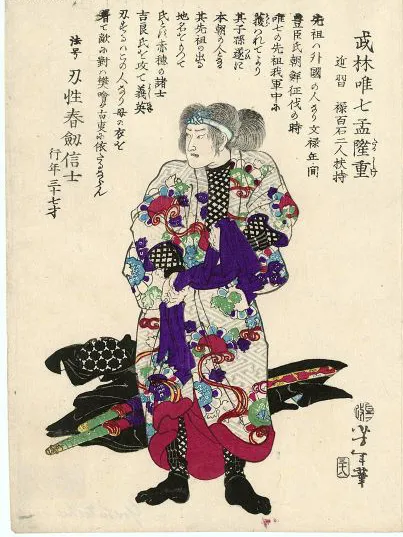 Takebayashi Sadashichi Mō no Takashige (Takebayashi Tadashichi)VIEW PRINT ↗38Takebayashi Sadashichi Mō no Takashige (Takebayashi Tadashichi)2/1869
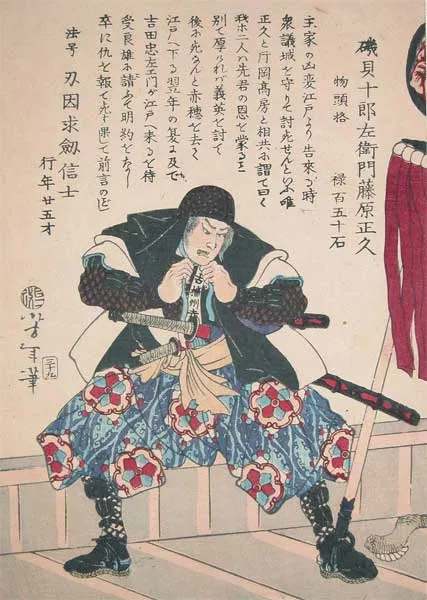 Isogai Jurozaemon Masahisa was an expert of Naginata, the long sword. After the death of his lord, he intended to kill himself but was informed of Oishi's plan of revenge. Masahisa was a gentle man, yet he fought valiently at the raid.VIEW PRINT ↗39Isogai Jurōemon Fujiwara no Masahisa (Isogai Jūrōzaemon)2/1869
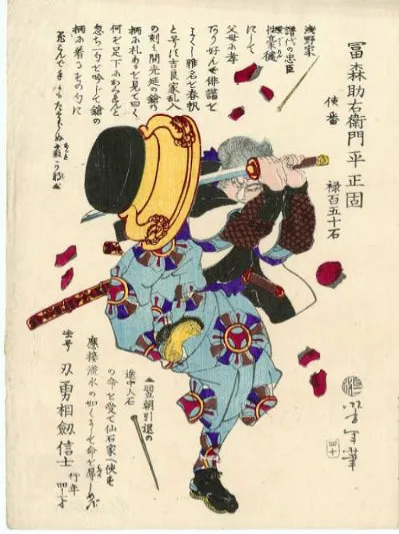 Tomimori Sukeemon Taira no MasayoriVIEW PRINT ↗40Tomimori Sukeemon Taira no Masayori2/1869
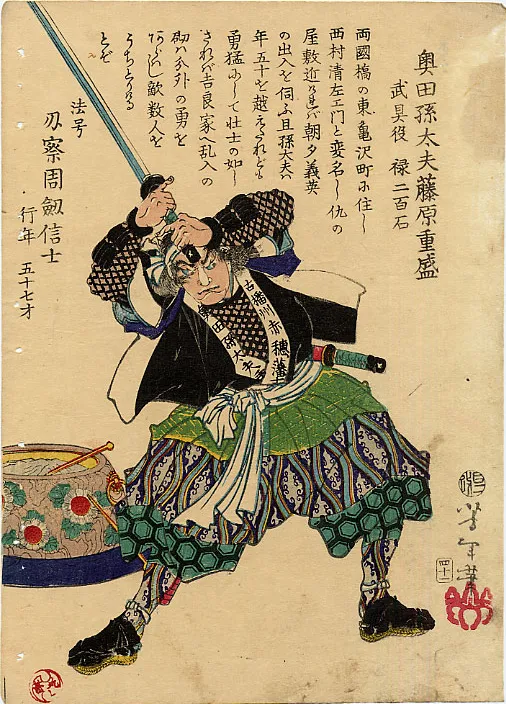 Okada Magodayū Fujiwara no Shigemori (Okuda Magodayū)VIEW PRINT ↗41Okada Magodayū Fujiwara no Shigemori (Okuda Magodayū)2/1869
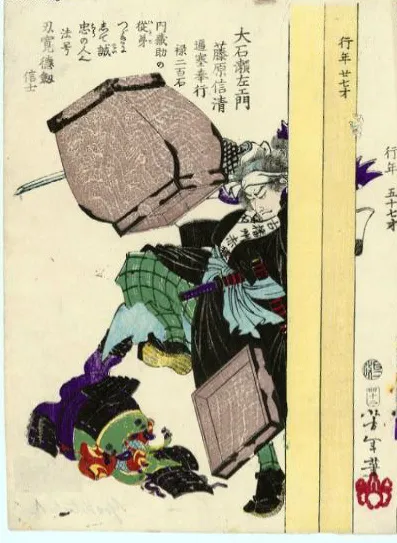 Ōishi Sezaemon Fujiwara no NobukiyoVIEW PRINT ↗42Ōishi Sezaemon Fujiwara no Nobukiyo2/1869
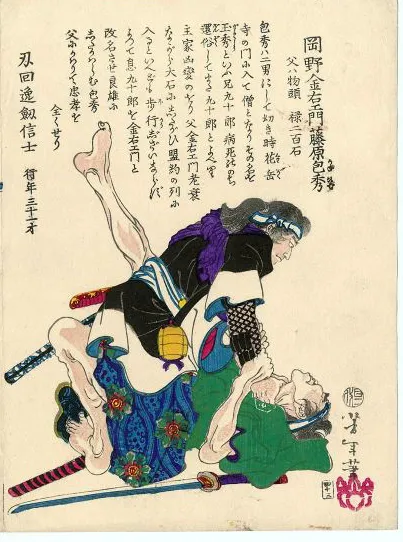 Okano Kin'emon Fujiwara no Kanehide (Okano Kinemon)VIEW PRINT ↗43Okano Kin'emon Fujiwara no Kanehide (Okano Kinemon)2/1869
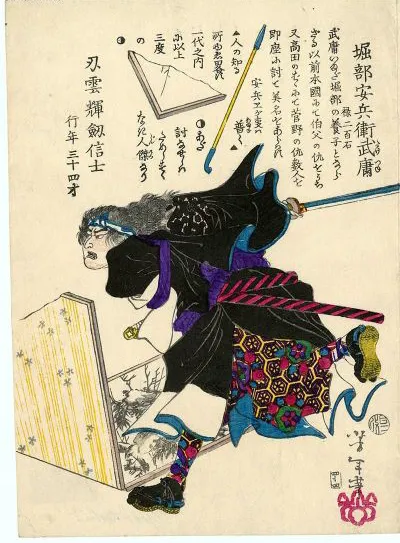 Horibe Yasubei TaketsuneVIEW PRINT ↗44Horibe Yasubei Taketsune2/1869
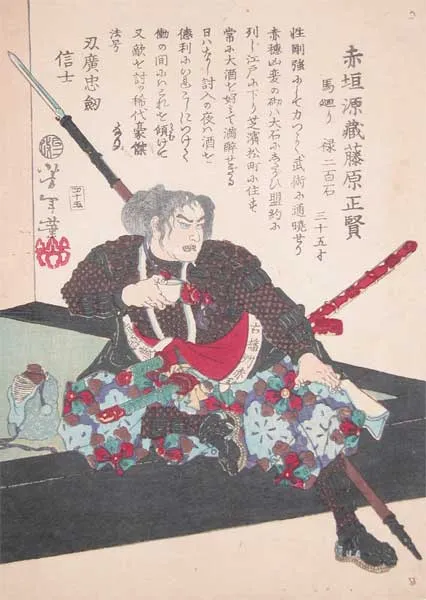 Akagaki Genzo Masakata was fond of drinking sake. In spite of his drinking he was always respectful to everyone. On the night of the raid he was 25 years old and fought with great enthusiasm.VIEW PRINT ↗45Akagaki Genzō Fujiwara no Masakata2/1869
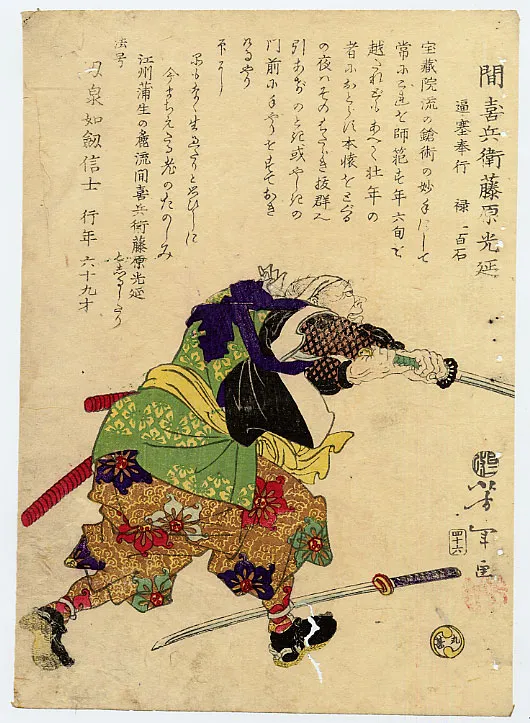 Hazama Kihei Fujiwara no MitsunobuVIEW PRINT ↗46Hazama Kihei Fujiwara no Mitsunobu2/1869
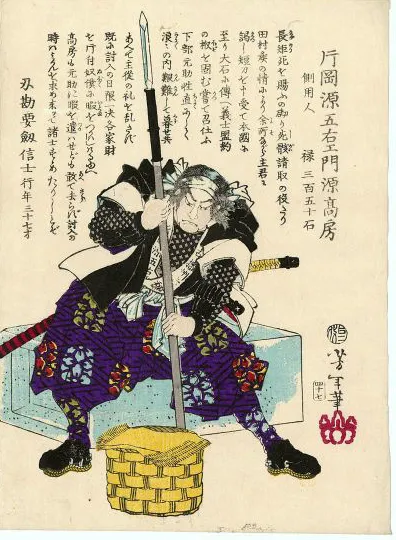 Kataoka Gengoemon Minamoto no TakafusaVIEW PRINT ↗47Kataoka Gengoemon Minamoto no Takafusa2/1869
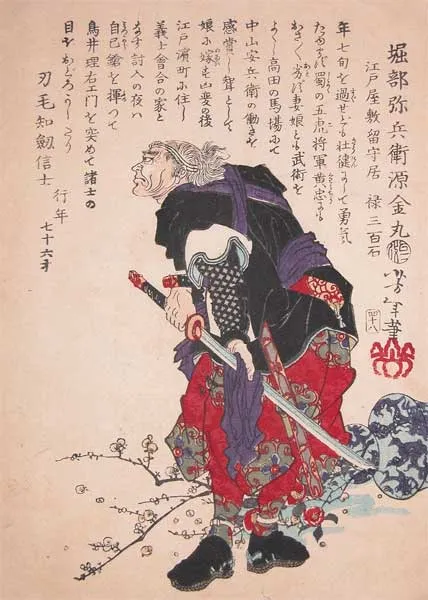 Horibe Yahei Minamoto no KanemaruVIEW PRINT ↗48Horibe Yahei Minamoto no Kanemaru2/1869
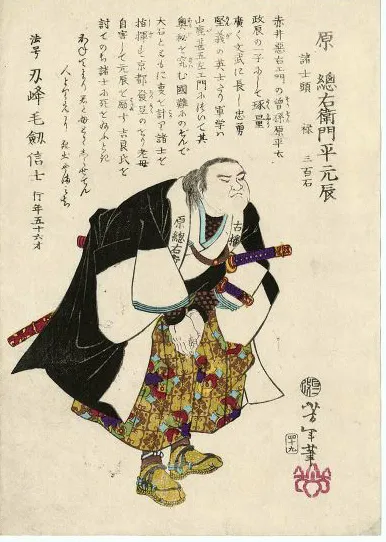 Hara Sōemon Taira no MototokiVIEW PRINT ↗49Hara Sōemon Taira no Mototoki2/1869Ōishi Kuranosuke Fujiwara no YoshioVIEW PRINT ↗50Ōishi Kuranosuke Fujiwara no Yoshio2/1869
Names, alternative readings, and biographical notes are preserved from the original catalogue. Images are presented as reduced display copies.
This page catalogs all prints in Yoshitoshi's series 'Seichū gishi meimei gaden (Historical Biographies of the Loyal Retainers)'.
The story of the forty-seven rōnin is one of the best known stories in Japanese literature. The rōnin were former samurai of the Lord Asano Naganori. In the year 1701, Asano had been charged with the reception ceremony for the Imperial envoy, an important event. He was a soldier, and the Shogun assigned Lord Kira Yoshihisa (who had better knowledge of the ceremonial requirements) to assist Asano. Kira was apparently corrupt, and expected a bribe for his services from Asano. When Asano did not produce the bribe, Kira abandoned him without assistance. Asano completed the ceremony for the Imperial envoy, although it was not entirely in order. He later confronted Kira and in anger drew his sword. He wounded but did not kill Kira. The offense of drawing the sword was punishable by death and Asano was forced to commit seppuku.
Forty-seven of Asano's samurai, led by Captain Oishi Kuranosuke, developed a plan to avenge their late master. They blended into society and domestic lives, giving no hint that they harboured a secret plan. Oishi played a convincing drunk, and was derided by many, including former colleagues. Several other co-conspirators were able to infiltrate Kira's household. On December 14, 1702, the faithful samurai attacked Kira's compound in Edo. They were able to defeat the defenders, and found Kira cowering in a woodshed. Kira refused seppaku, and was killed. Thereafter, the samurai Terasaka Kichiemon was dispatched to carry news of the successful attack. The remaining 46 rōnin presented themselves to the Shogun. The rōnin had defied a shogunate order prohibiting revenge, but had also exemplified the precepts of bushido. The Shogun allowed the rōnin to commit seppaku, rather than having them executed. The 46 rōnin committed suicide on February 4, 1703. Terasaka Kichiemon, the 47th rōnin, returned the following day but was pardoned. He was the only member to survive and died at the age of 78.
You may be interested to read the account in "Tales of Old Japan"; although note that the historical reality is somewhat different from Redesdale's version (which includes many incidents added to the story over the years in its dramatization).
This story has spawed many accounts, or Chushingura, and many kabuki plays, the most popular being 'Kanadehon Chushingura.' Many ukiyo-e artists, including Kuniyoshi and Yoshitoshi, have created many works that deal with this popular subject.
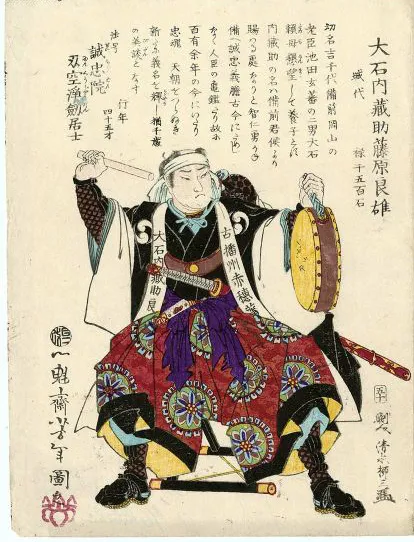
In this chūban series, Seichū gishinden, Yoshitoshi depicts the 47 rōnin along with biographical information.
The 50 catalogue entries include a preface, Kira, Asano, and the forty-seven rōnin. Prints follow Keyes series 255 order. Names retain the full transcription and customary alternative names supplied in the original page. Individual Japanese name transcriptions were not supplied in that page.
Historical narratives and biographical descriptions are preserved as supplied. Accounts of the forty-seven rōnin include literary embellishments; the source page also gives differing ages for Terasaka in the introduction and his entry.
SCHOLARSHIP & ACKNOWLEDGEMENTS
Roger S. Keyes · 1982
A Study of the Life and Color Woodblock Prints of Tsukioka Yoshitoshi 1839–1892. Series 255.A literary account of the forty-seven rōnin
Read the account ↗. The original catalogue notes differences between this dramatized account and historical reality.With thanks to the Museum of Fine Arts, Boston, whose website supplied the complete name transcriptions used in the original catalogue.