THE SERIES COLLECTION · KEYES 404
Specialties of Restaurants in the Imperial City
皇都会席別品竸
Kōto kaiseki beppin kurabe
Tsukioka Yoshitoshi · 04/1878
THE SERIES COLLECTION
SPECIALTIES OF RESTAURANTS IN THE IMPERIAL CITY皇都会席別品竸
Hover to view details. Select a print to open its image and description.
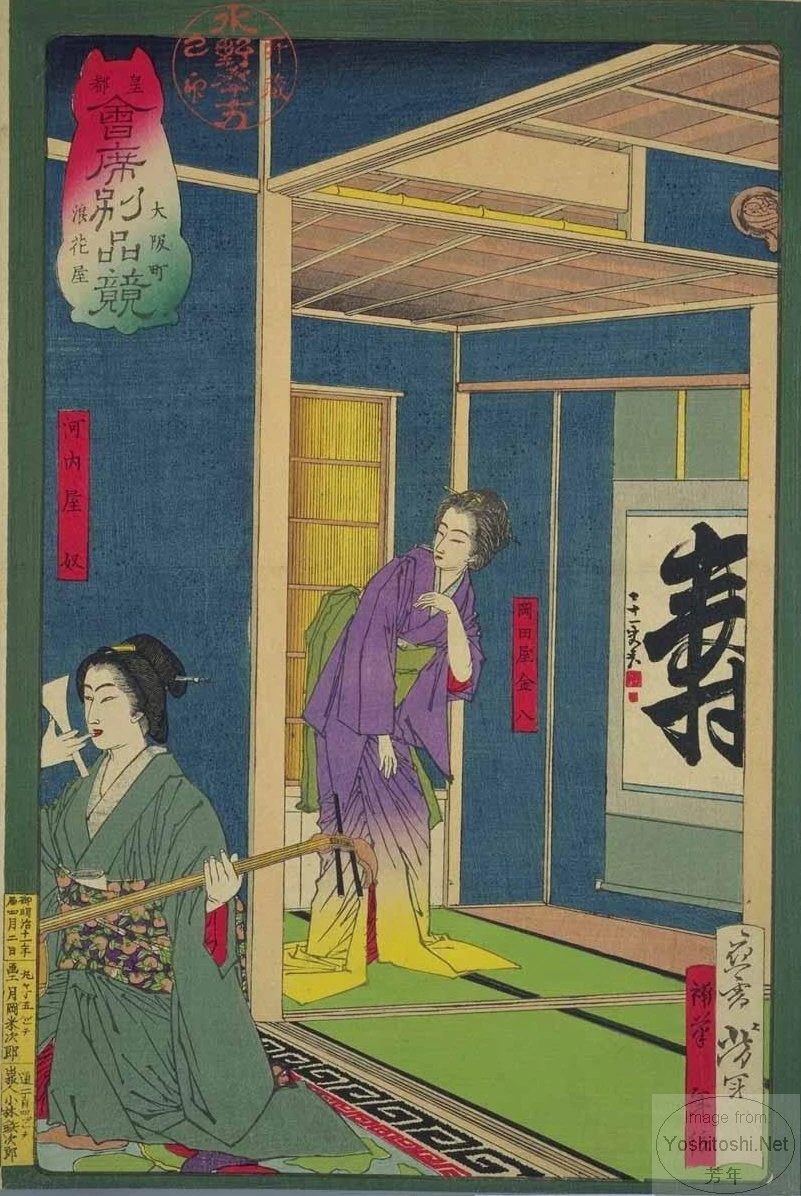
大阪町 浪花屋The Namiwa-ya restaurant in the Ōsaka DistrictVIEW PRINT ↗#1The Namiwa-ya restaurant in the Ōsaka District4/1878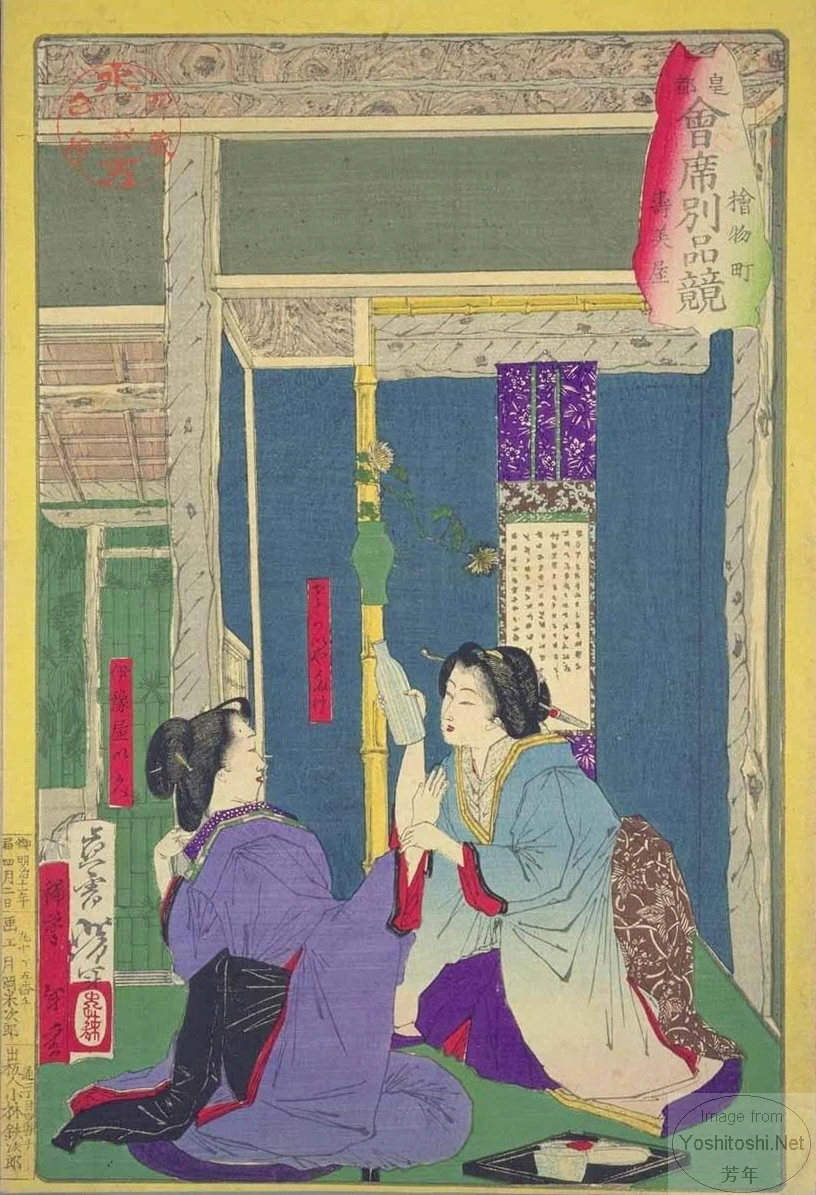 檜物町 壽美屋The Sumi-ya restaurant in the Himono DistrictVIEW PRINT ↗#2The Sumi-ya restaurant in the Himono District4/1878
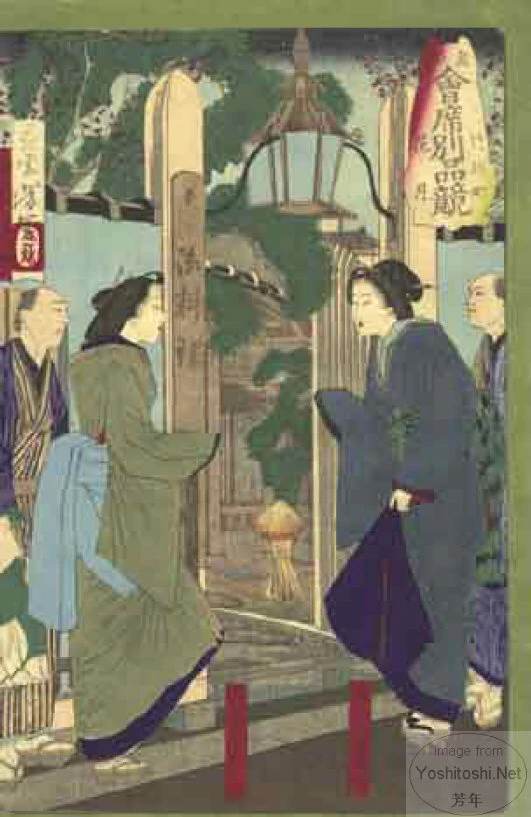 竹川町 花月(亭)The Kagetsu restaurant in the Takegawa DistrictVIEW PRINT ↗#3The Kagetsu restaurant in the Takegawa DistrictPossibly 4/1878
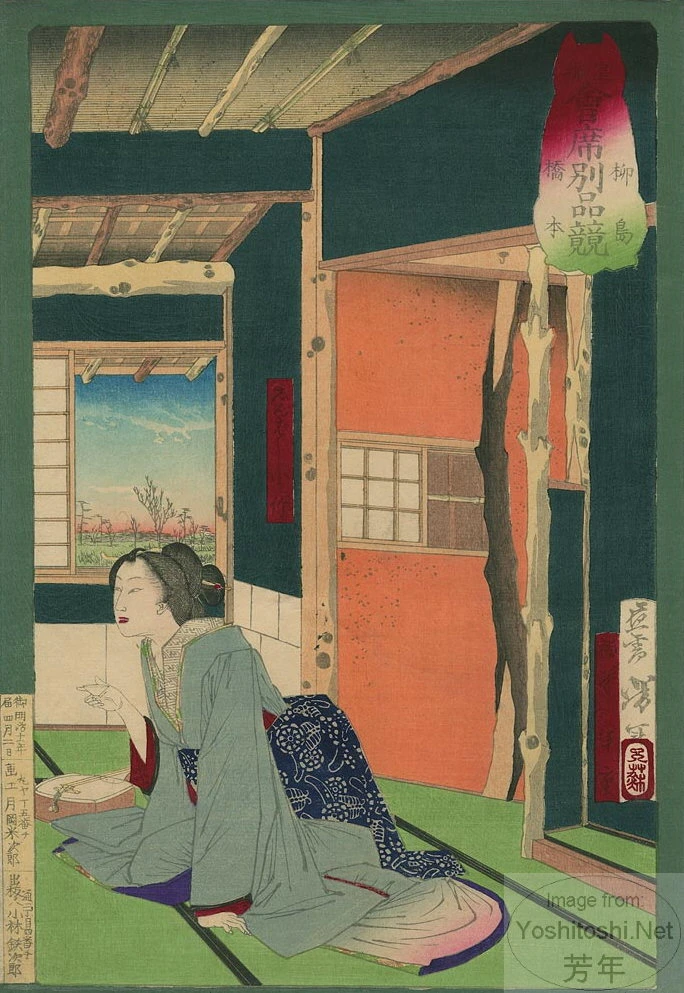 柳島 橋本The Hashimoto restaurant at Yanagi IslandVIEW PRINT ↗#4The Hashimoto restaurant at Yanagi IslandPossibly 4/1878
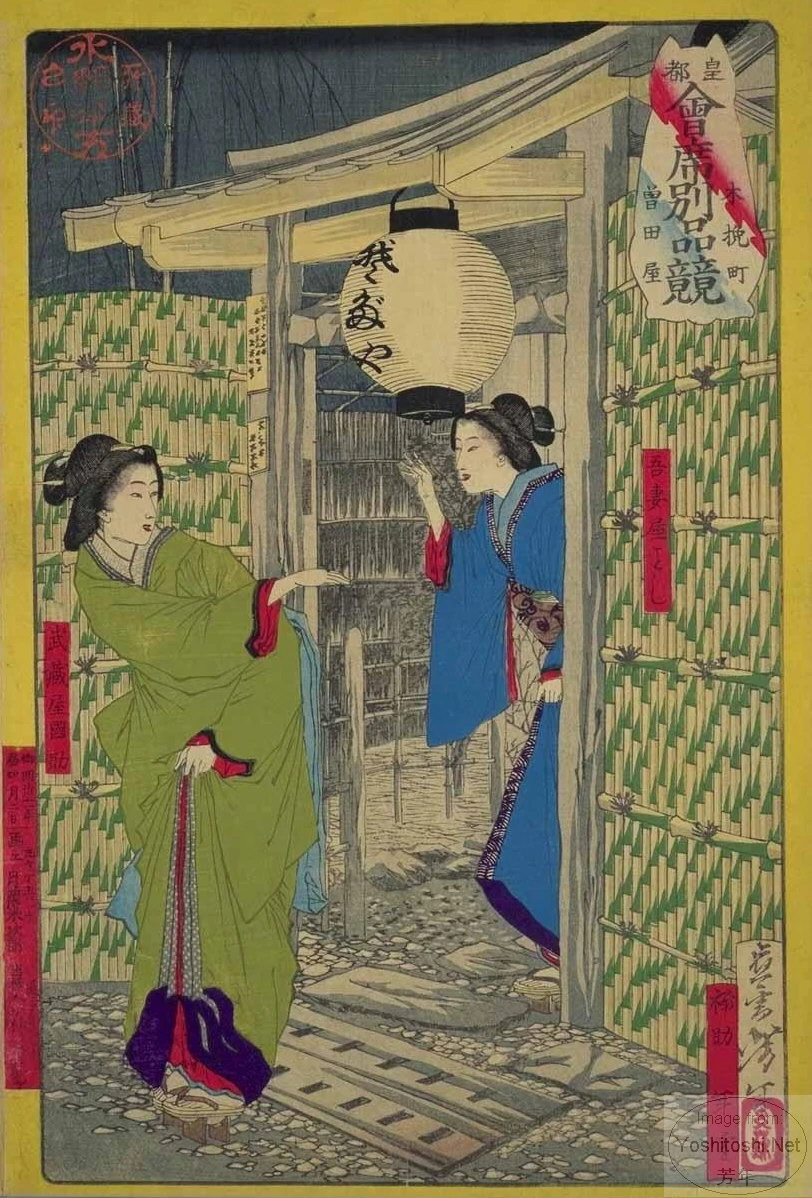 木挽町 曽田屋The Sōda-ya restaurant in the Kobiki DistrictVIEW PRINT ↗#5The Sōda-ya restaurant in the Kobiki DistrictPossibly 4/1878
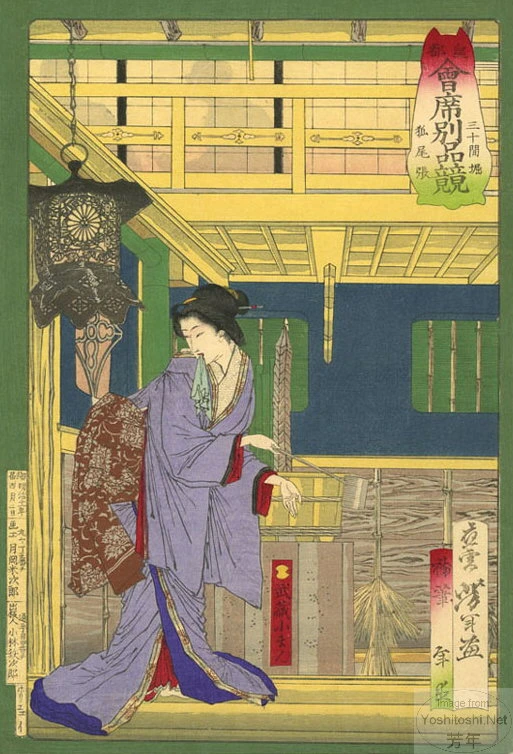 三十間堀 狐 尾張The Kitsune Owari restaurant at Sanjūkken CanalVIEW PRINT ↗#6The Kitsune Owari restaurant at Sanjūkken CanalPossibly 4/1878
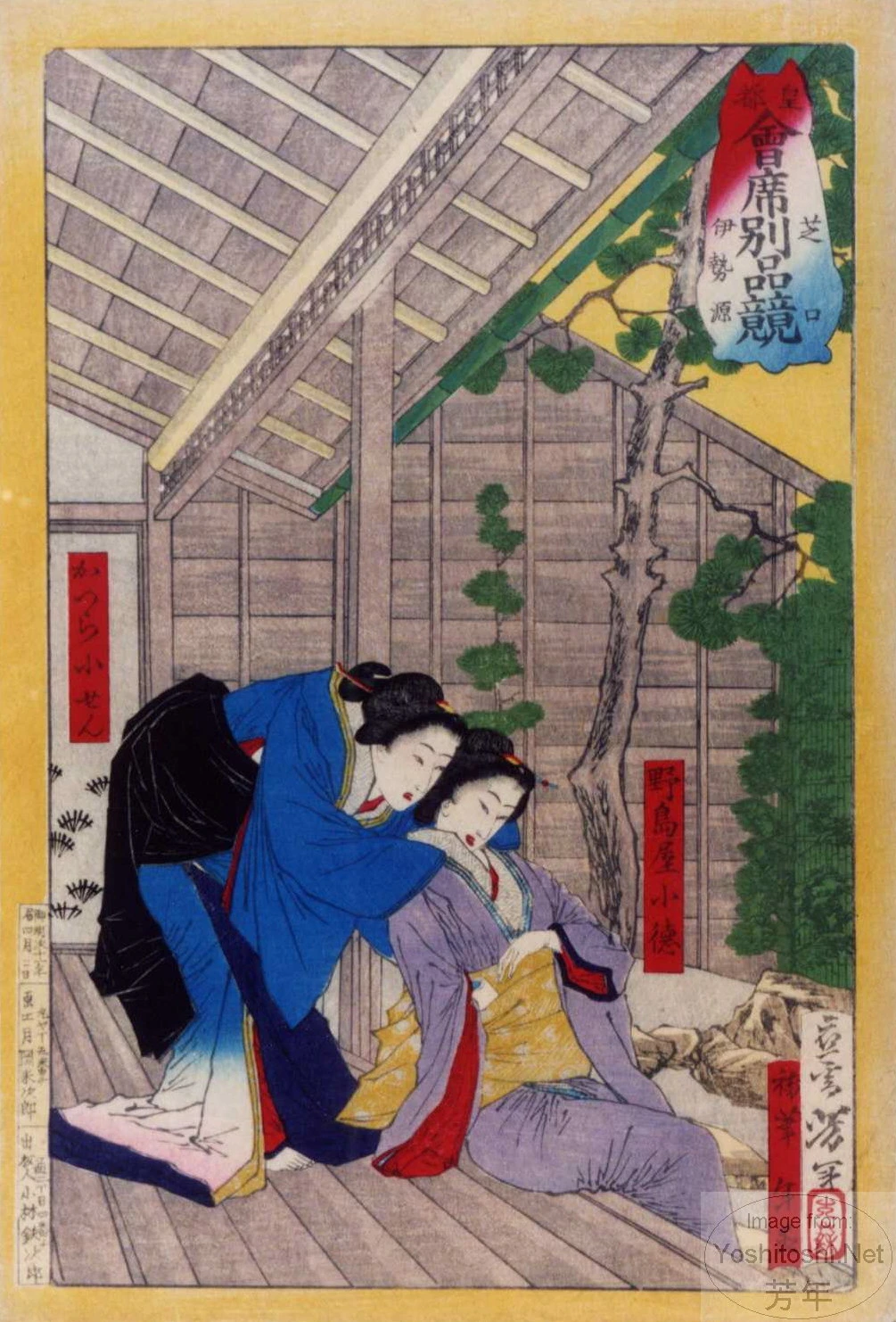 芝口 伊勢源The Isegen restaurant at ShibakuchiVIEW PRINT ↗#7The Isegen restaurant at Shibakuchi4/1878
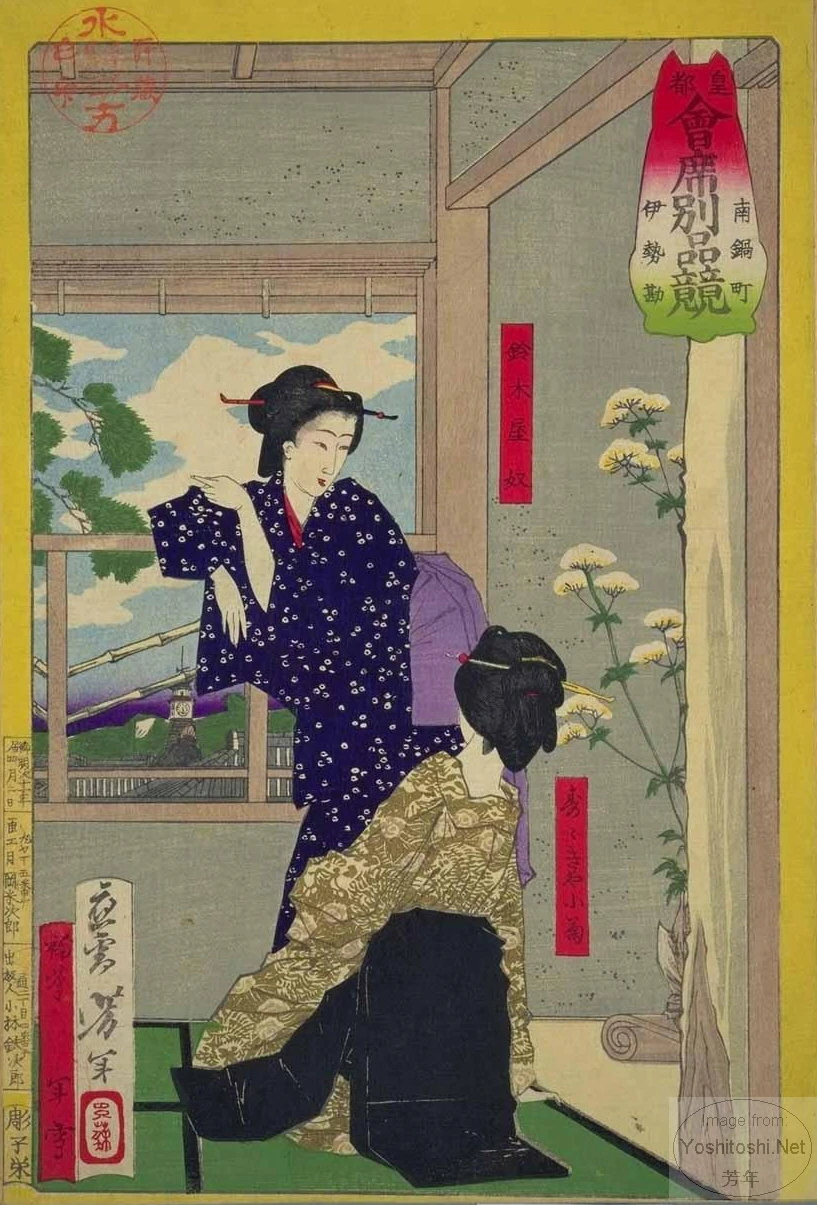 南鍋町 伊勢勘The Isekan restaurant in the Minami-nabe DistrictVIEW PRINT ↗#8The Isekan restaurant in the Minami-nabe DistrictProbably 4/1878
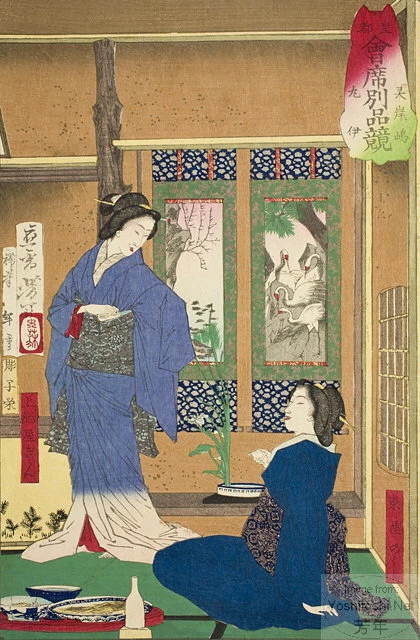 㚑岸嶋 丸伊The Marui restaurant at Reigan IslandVIEW PRINT ↗#9The Marui restaurant at Reigan Island4/1878
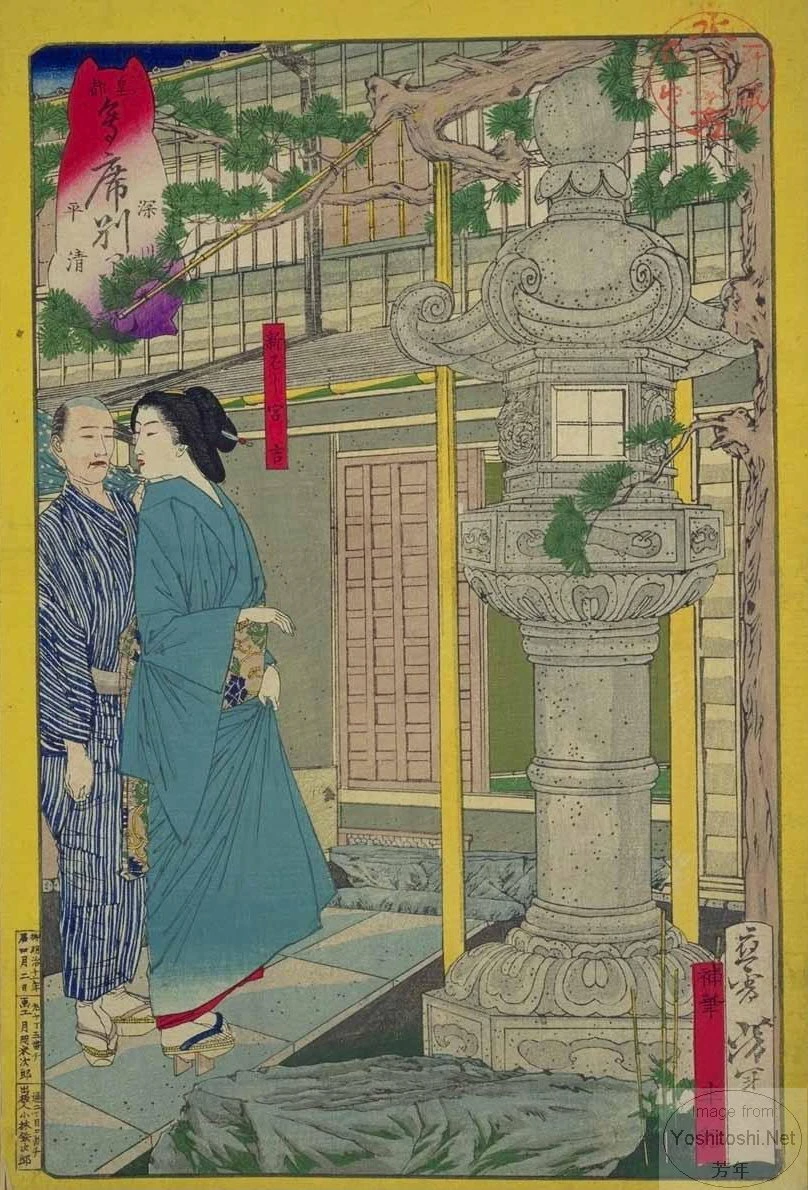 深川 平清The Hirakiyo restaurant at FukagawaVIEW PRINT ↗#10The Hirakiyo restaurant at FukagawaProbably 4/1878
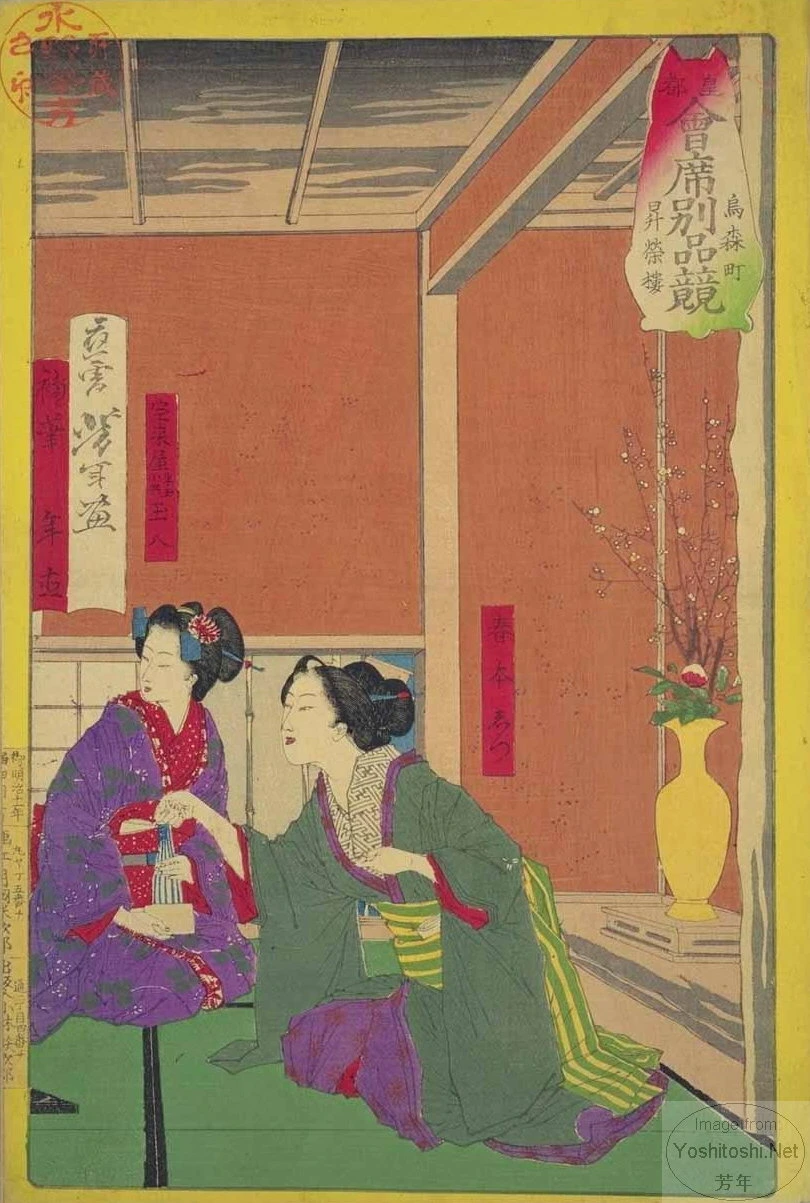 烏森町 昇榮樓The Shoeirō restaurant in the Karasumori DistrictVIEW PRINT ↗#11The Shoeirō restaurant in the Karasumori DistrictProbably 4/1878
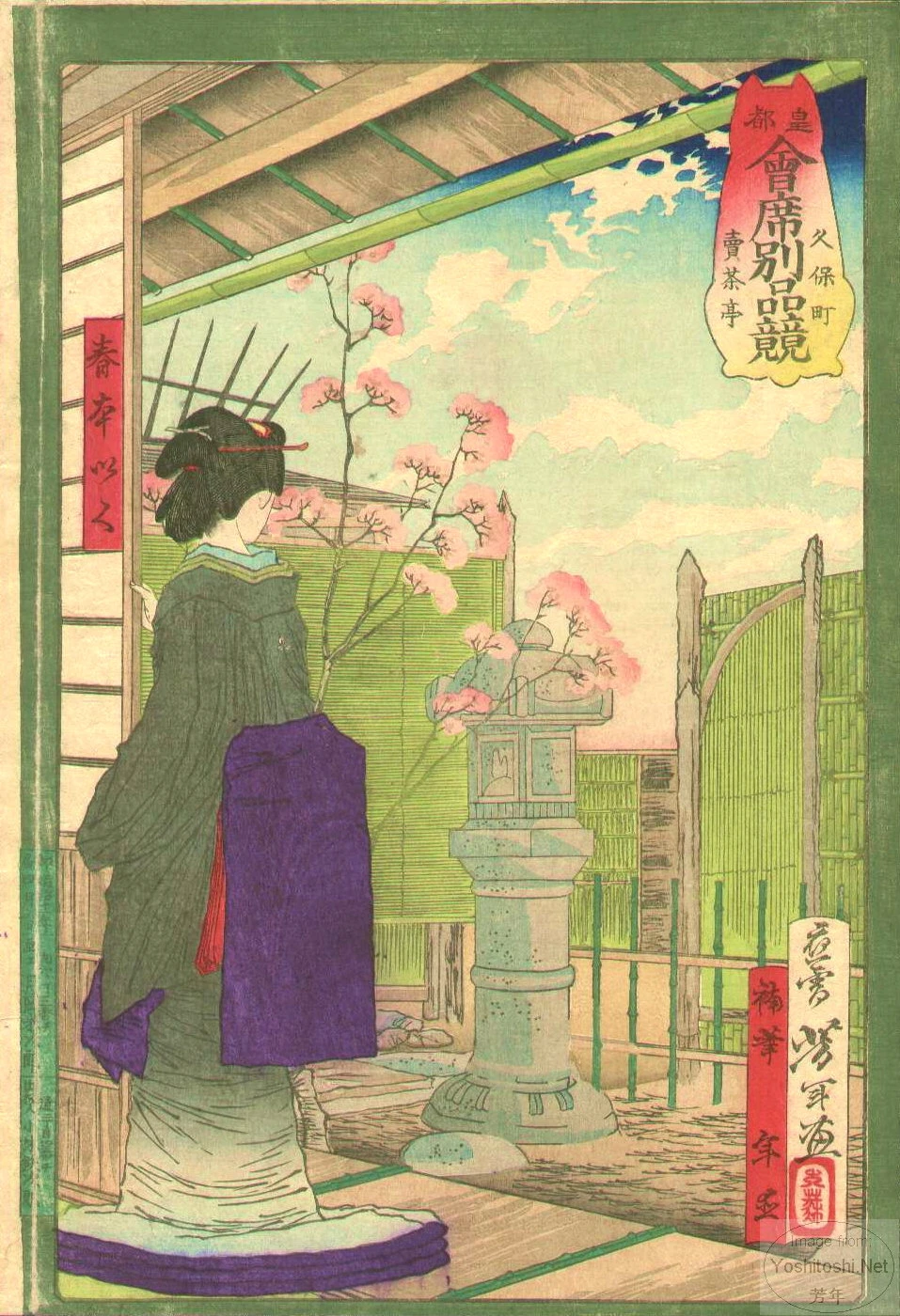 久保町 賣茶亭The Baicha Restaurant in the Kubo DistrictVIEW PRINT ↗#12The Baicha Restaurant in the Kubo DistrictPossibly 4/1878
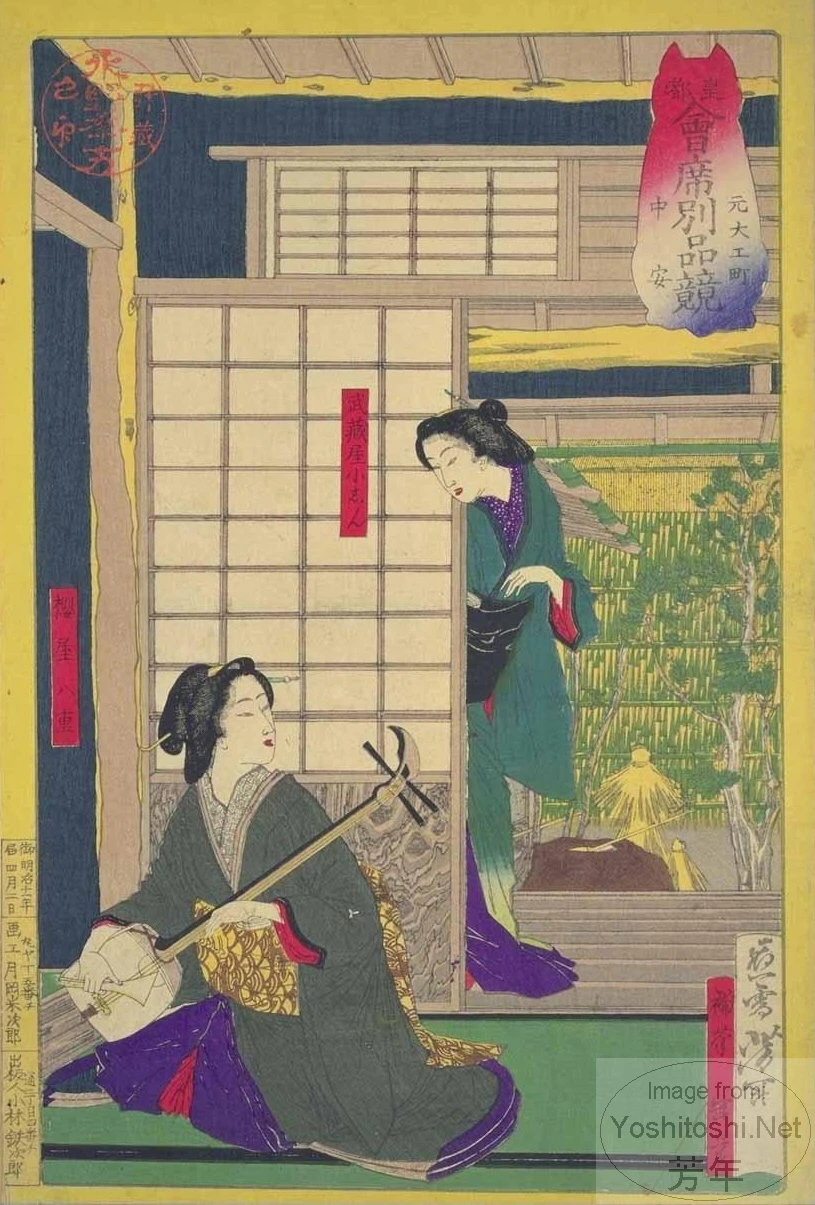 元大工町 中安The Nakayasu restaurant in the Motodaiku DistrictVIEW PRINT ↗#13The Nakayasu restaurant in the Motodaiku District4/1878
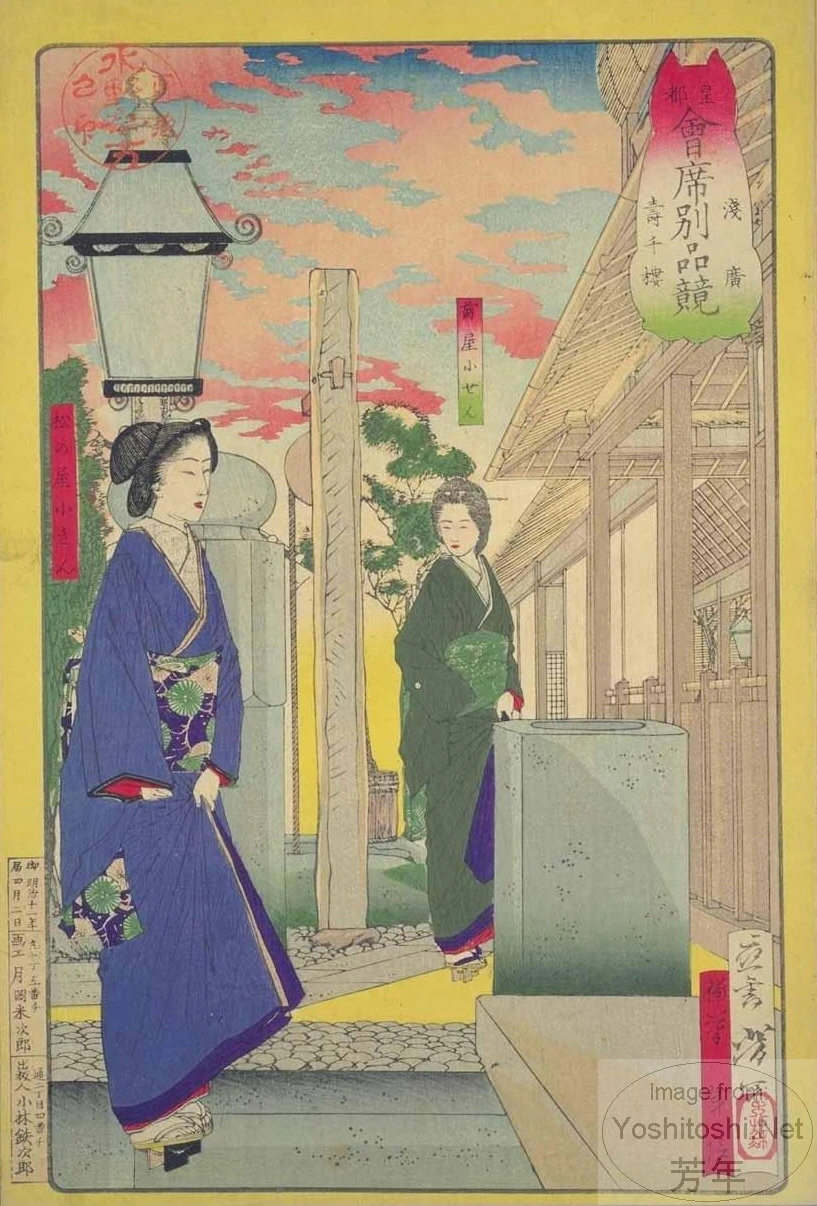 淺廣 壽千樓The Jusenrō restaurant at AsahiroVIEW PRINT ↗#14The Jusenrō restaurant at Asahiro4/1878
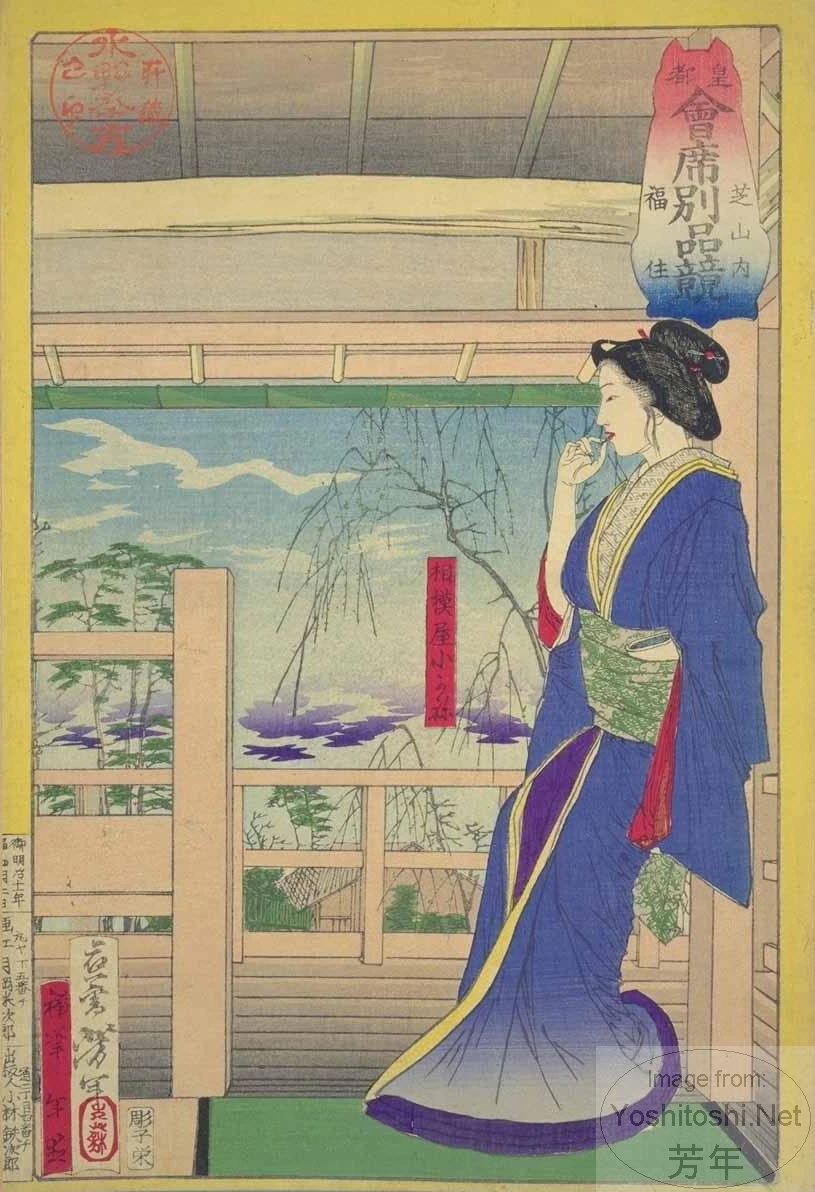 芝 山内 福住The Fukuzumi restaurant in the grounds of Shiba ShrineVIEW PRINT ↗#15The Fukuzumi restaurant in the grounds of Shiba Shrine4/1878
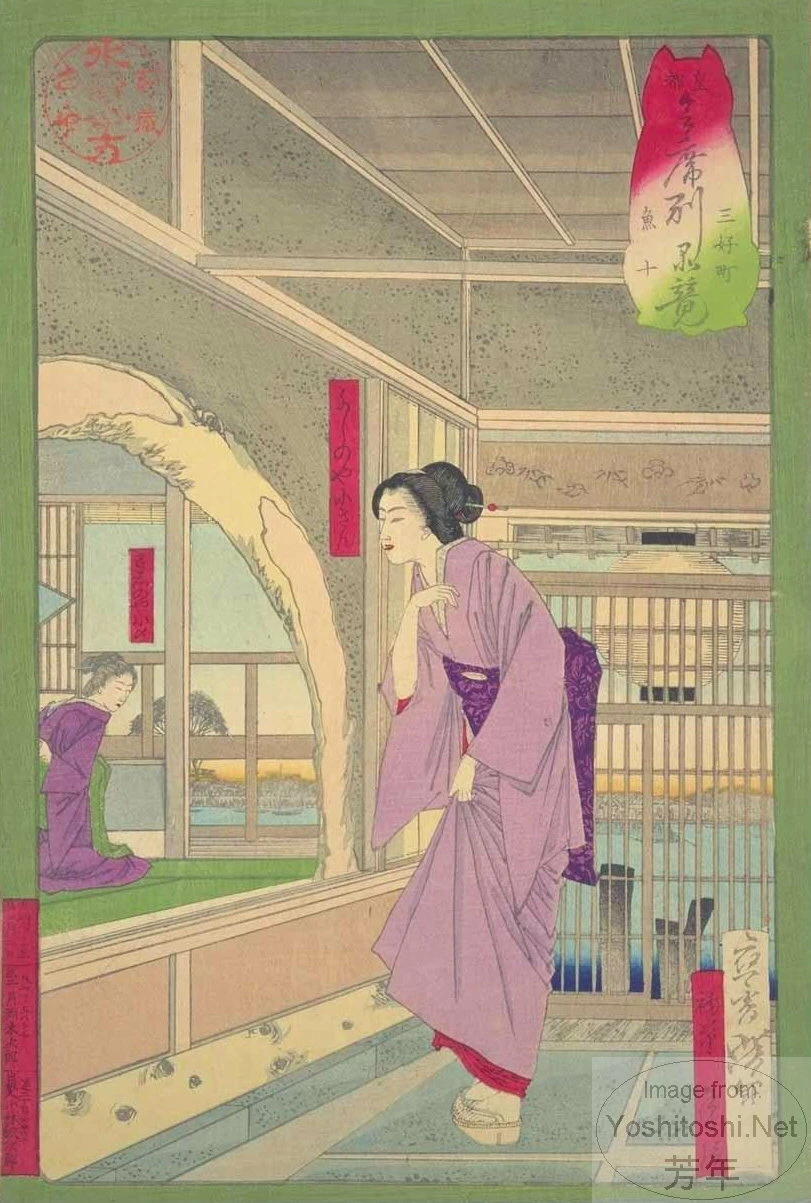 三好町 魚十The Uojū restaurant in the Miyoshi DistrictVIEW PRINT ↗#16The Uojū restaurant in the Miyoshi DistrictPossibly 4/1878
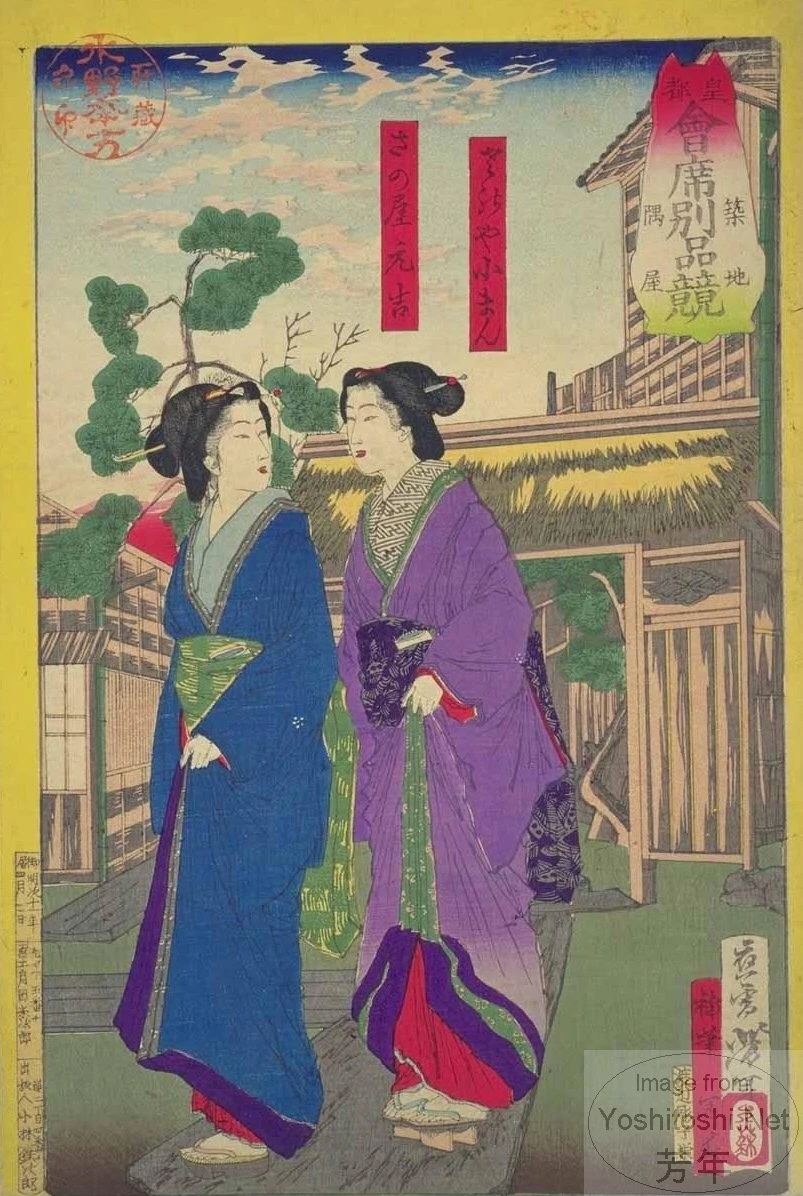 築地 隅屋The Sumi-ya restaurant at TsukijiVIEW PRINT ↗#17The Sumi-ya restaurant at Tsukiji4/1878
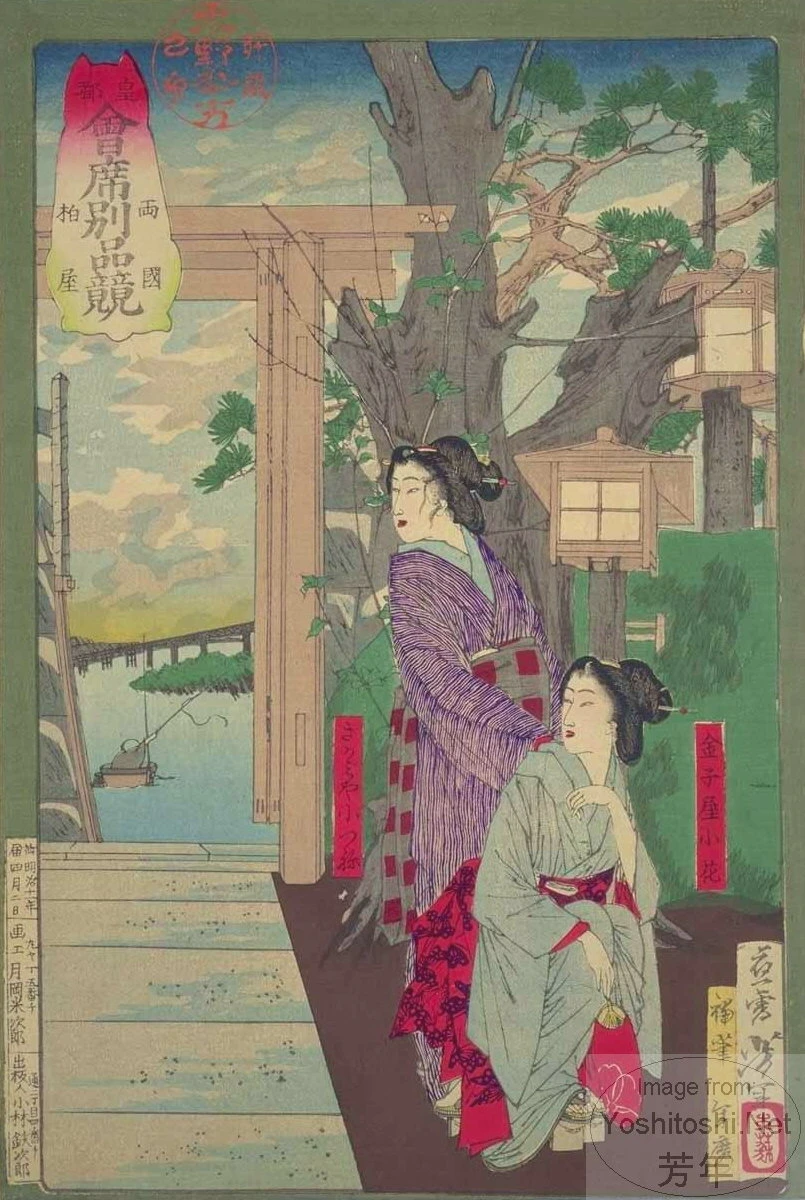 両國 柏屋The Kashiwa-ya restaurant at RyōgokuVIEW PRINT ↗#18The Kashiwa-ya restaurant at Ryōgoku4/1878
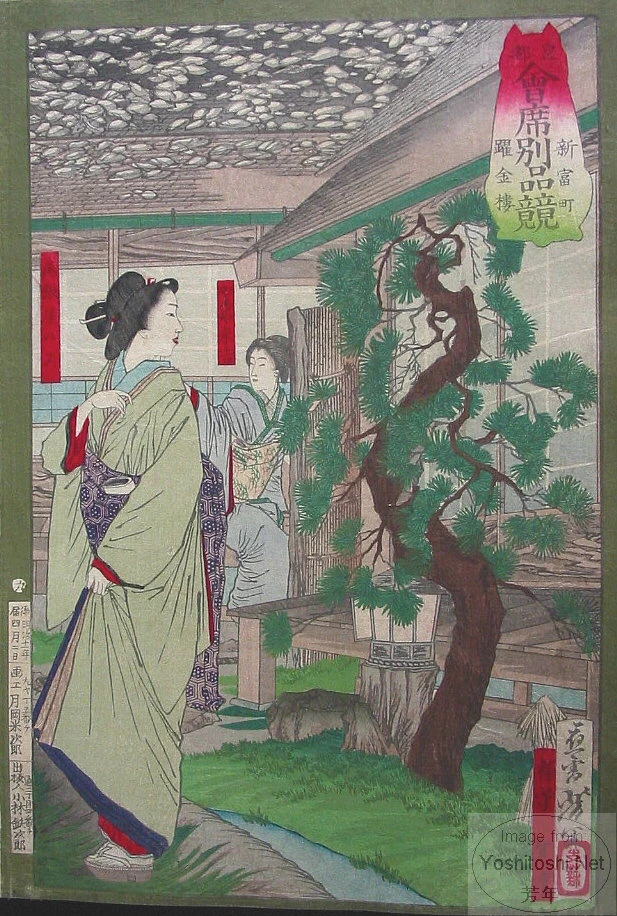 新富町 躍金樓The Yakukinrō restaurant in the Shintomi DistrictVIEW PRINT ↗#19The Yakukinrō restaurant in the Shintomi District1878/4
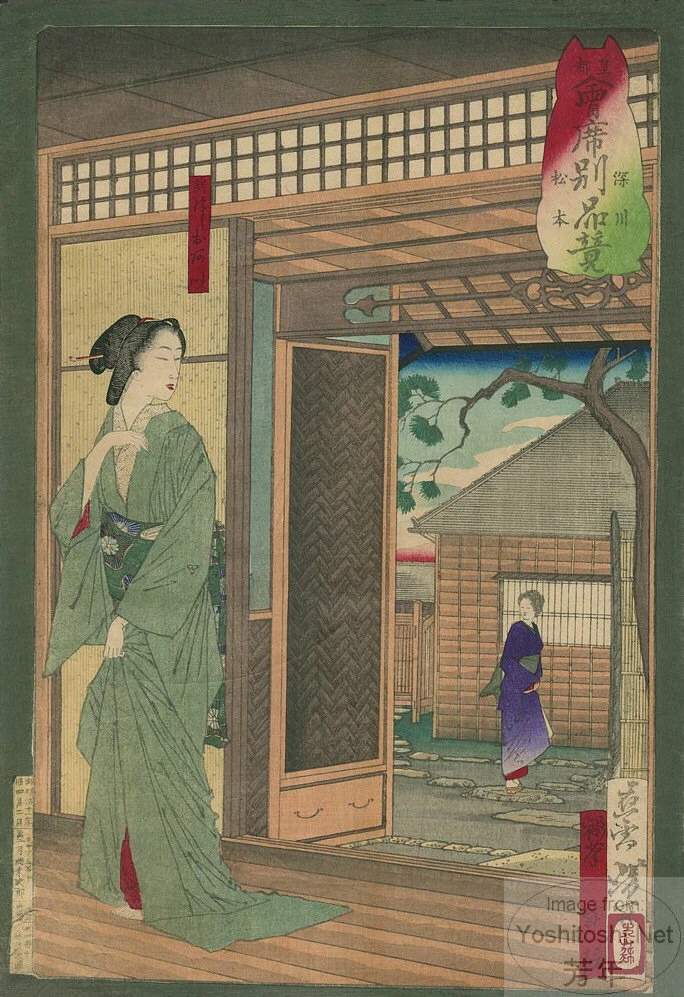 深川 松本The Matsumoto restaurant at FukagawaVIEW PRINT ↗#20The Matsumoto restaurant at FukagawaPossibly 1878/4
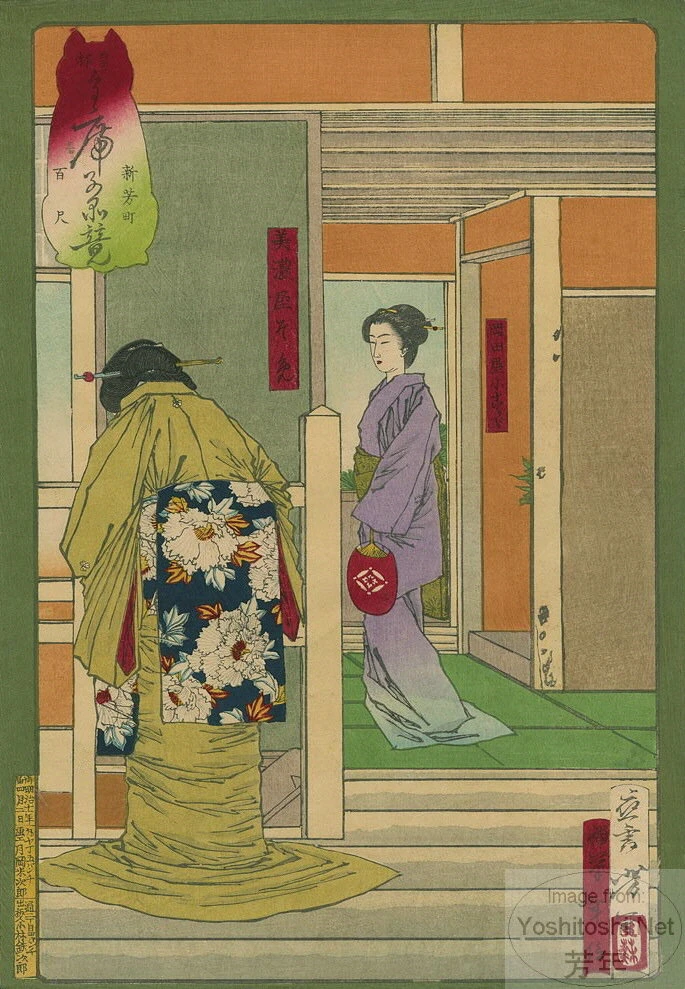 新芳町 百尺The Momoseki restaurant in the New Yoshi DistrictVIEW PRINT ↗#21The Momoseki restaurant in the New Yoshi DistrictPossibly 1878/4
Print numbers retain the original Keyes-based order and site additions. Collaborator names are preserved for each entry.
About the Series
The title is given a wide range of translations, depending on how literal - and discreet - the translator wishes to be; in the original Japanese it seems to have a number of potential double meanings which are difficult to capture in English. kaiseki means 'meeting place', 'party', 'restaurant dinner', etc.; beppin is a somewhat vulgar word meaning 'beautiful woman'; and kurabe means 'competition' or 'auction'. So one plausible translation is 'Competition between beautiful women at restaurants'.
The characters for Kōto, 'Imperial city', in the title cartouche are written horizontally in small characters above the others; those words are therefore sometimes left out of the title given for this series.
Note that Japanese at that point in time was generally written in vertical columns, running from right to left; a horizontal arrangement was used only where the text had to fit into a limited space. In such horizontal writing, the characters ran from right to left, since it was a special case of the normal vertical writing, one in which each column contains only a single character. Only after World War II did the left-to-right horizontal form common in Western languages become widespread in Japan.
The title of each individual print are on the sides of the cartouche which holds the series title; the location is given at the bottom right, and the establishment at the bottom left.
The series dates from toward the end of Yoshitoshi's career, when he was about thirty-nine. It thus dates from only about seven years before his well-known masterpieces such as his great series "One Hundred Aspects of the Moon" (1885-1892), and "New Forms of Thirty-Six Ghosts" (often called simply "Thirty-Six Ghosts") (1889-1892).
The prints in this series are collaborations between Yoshitoshi and various of his students, including:
- Utagawa Toshimasa (fl. ca. mid-1890s)
- Yamazaki Toshinobu (1857-1886)
- Arai Toshiyuki (1863-1941)
Publication details
- Dates: 4/1878
- Size: Ōban
- Signed: Ōju Yoshitoshi
- Seals: Taiso
- Publishers: Kobayashi Tetsujirō
- Block carvers: Hori Koei
Catalogue references and numbering
Print numbers retain the original Keyes-based order and site additions. Collaborator names are preserved for each entry.
The only known attempts to enumerate this series was in Keyes' thesis:Roger. S. Keyes, "Courage and Silence: A Study of the Life and Color Woodblock Prints of Tsukioka Yoshitoshi 1839-1892", Cinncinnati, 1982where it appears as series #404.
Keyes listed nine prints in this series, but we have found an additional twelve prints, which we have numbered in the order in which they were discovered (approximately).
This page (and list) is not necessarily complete; the series is not well documented, and there may be yet other prints which have not yet come to our attention. If you know of any prints from this series which aren't listed here, or have either i) information about any errors on the page, ii) better images than the ones below, iii) missing information about individual prints (e.g. publisher, exact date), please let us know.